By GREGORY ZELLER //
A Los Angeles foundation on a medical-science mission has doubled down on Stony Brook University.
The W.M. Keck Foundation – established in 1954 by its namesake, founder of the Superior Oil Co. – has awarded a three-year, $1 million grant to SBU researchers studying the nutrition of brain neurons and how it affects cognition in older populations.
 The foundation this week also announced a three-year, $300,000 grant to bring a National Center for Science and Civic Engagement program to SBU. The national program is designed to “expand educational courses connecting indigenous knowledge to science,” according to the university, while advancing partnerships between educators and the surrounding community.
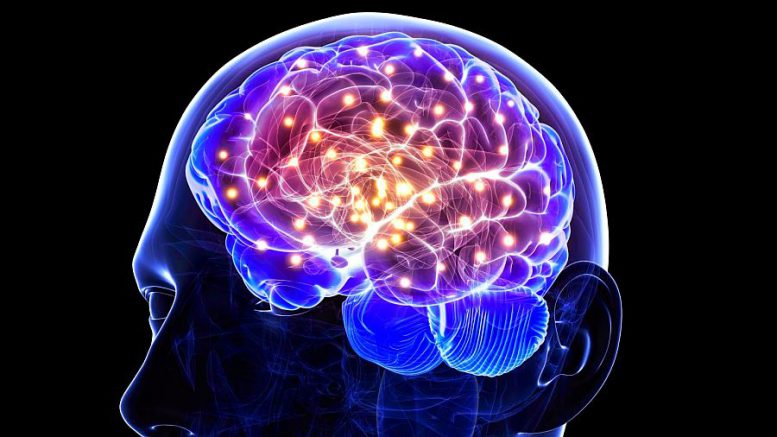
The brain-neuron project, “Protecting the Aging Brain: Self-Organizing Networks and Multi-Scale Dynamics Under Energy Constraints,” could provide a critical first step toward “personalized” neurological medicine for aging patients.
Investigators will integrate human neuroimaging data – from positron emission tomography and advanced Tesla fMRI machines – with “multi-scale biomimetic modeling” to test how diet and other factors affect neural efficiency in the aging brain.
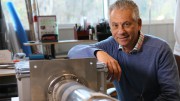
Lead researcher Lilianne Mujica-Parodi, an associate professor of biomedical engineering at the Stony Brook University School of Medicine, is collaborating with researchers at Massachusetts General Hospital and Harvard Medical School’s Martinos Center for Biomedical Engineering on the brain study.
Specifically, the team will focus on exogenous ketones – an increasingly popular nutritional supplement since their introduction in 2014 and, in this case, an alterative to glucose as a neurological fuel.
The research is early-stage and won’t lead directly to those customizable neurological medications, according to Mujica-Parodi. But the project could prove that such medicinal advances are possible.
“By using the imaging and biomimetic modeling techniques, we will investigate the use of exogenous ketones … as a way to ameliorate age-related effects,” the biomedical engineer said. “We hope our findings prove that personalized medicine for neurology is within our reach and that our methods can be a model toward that goal.”
While Mujica-Parodi and her collaborators will focus on older minds, the second Keck Foundation SBU grant targets some of the university’s youngest. The NCSCE’s “Transcending Barriers to Success: Connecting Indigenous Knowledge to Science” program is, at heart, a STEM-education initiative (for science, technology, engineering and mathematics) and “will help establish and advance robust partnerships between indigenous populations and educators,” according to the university.

Lilianne Mujica-Parodi: Model behavior.
That’s both a win for “undergraduate educational outcomes” and a tool to “promote cultural understanding,” SBU added. University President Samuel Stanley called the $300,000 grant an “important award” that will “support unique research central to one of Stony Brook University’s educational missions – to expand undergraduate education in STEM fields within the context of a diverse society.”
“By also incorporating cultural understanding within all areas of the sciences, this transformative educational program will further enhance the academic experiences of faculty and students,” Stanley added.
Built around SENCER – a signature initiative that aims to empower faculty and improve STEM outcomes by focusing on civic issues – the NCSCE project will be housed within the Department of Technology & Society in SBU’s College of Engineering and Applied Sciences.
During the three-year grant period, 41 courses in areas such as chemistry, biology and environmental science will be revised based on an “educational collaborative” between “formal educators,” community leaders and other contributors, the university said.
In addition to its national grant-making efforts in support of medical and engineering research, the W.M. Keck Foundation maintains an undergraduate education program that promotes distinctive learning and research experiences for science and liberal arts students. The foundation also operates a Southern California Grant Program in support of the Los Angeles community, with a particular emphasis on children from low-income families and special-needs populations.
Its support of programs like Mujica-Parodi’s brain-neuron study is both timely and forward-thinking, according to Stanley, who suggested the Keck Foundation-based research could ultimately “transform the way scientists study the aging brain.”
“The funding also comes at a crucial time,” the Stony Brook president said. “The aging of America will continue, and the importance of dietary and other interventions to protect the aging brain are more vital than ever.”