
By TERRY LYNAM //
When U.S. gymnast Simone Biles announced that she was withdrawing from the team finals and individual all-around competition at the Tokyo Olympics because she had to do “what’s right for me” and “focus on my mental health,” I admit – I initially viewed her as a “choker.”
 After all, she earns $5 million annually endorsing about a dozen companies, according to Forbes. You couldn’t turn on the TV without seeing her in a commercial. She’s often referred to as the “greatest of all time” in her sport.
So when it was time to compete, how could she bow out because of nerves? Or the “twisties,” as gymnasts call it (a frightening predicament when they lose control of their bodies as they spin through the air)? I spouted my opinion to my wife and daughters – they disagreed with me – and anyone else who’d listen.
But listening to Biles and others talk about the pressures and expectations of performing on the world’s biggest stage, I came to realize that the willingness of one of the world’s most-famous athletes to admit her vulnerabilities was a transformational moment – not only in sports, but in everyday life.
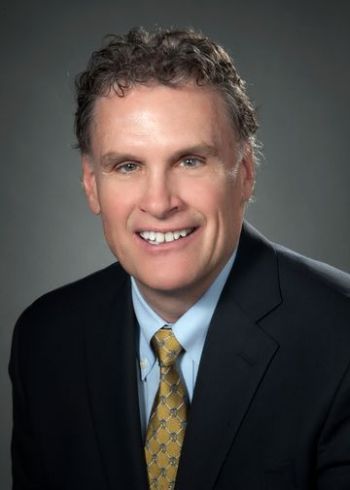
Terry Lynam: Lessons learned.
I saw comparisons between my out-of-touch, suck-it-up macho ramblings and the lame explanations of Gov. Andrew Cuomo, rationalizing his inappropriate behavior with women. At risk of overstating everything that’s happened this summer – and over the past 18 months, with the pandemic – this has been a time of awakening about mental health, the need for empathy and what constitutes “bad behavior” in the workplace.
Sports fans who curse their favorite players for striking out, throwing an interception or missing a free throw with the game on the line must realize that nobody feels worse than athletes who don’t come through “in the clutch.” We all love and appreciate sports heroes who thrive under pressure, but we certainly shouldn’t condemn them when they show that they are human.
Northwell Health child and adolescent psychiatrist Victor Fornari suggests the ability to acknowledge our shortcomings and anxiety transcends sports. “All of us can be allowed to be human without being stigmatized,” he says.
The issue has become especially relevant as children and teachers prepare to return to the classroom, and millions of others get back to the workplace. “The pandemic is normalizing mental-health problems because so many people feel anxious and depressed,” Fornari notes.
The warnings of public health experts about the dangers of the coronavirus, he says, have created an overwhelming sense of anxiety throughout society – albeit, “with the goal of keeping us alive.”
But transitioning people back to work and school is not like flipping a switch. For many, Fornari says, “Once you trigger anxiety, it’s unleashed in your brain and there’s no reasoning with it.”

Victor Fornari: Overcoming stigma.
Last week, the doctor attended a meeting of the Children’s Hospital Association where a big topic of discussion was the staggering number of children and adolescents showing up at hospital emergency rooms and pediatrician offices with mental-health problems. With Labor Day approaching and New York schools preparing to reopen, Fornari predicts the demand for child/adolescent psychiatry services will surge further.
Unfortunately, he says, there are not nearly enough child/adolescent psychiatrists to care for those in need, putting the onus on general pediatricians to become trained on how to best counsel youngsters suffering from stress, anxiety and depression.
The good news is that a growing number of both young people and adults are recognizing their vulnerabilities and seeking help. But countless others are still struggling. A recent study in the Journal of the American Medical Association found that more than two in five adults reported symptoms of either anxiety or depression amid the COVID-19 pandemic, with 25 percent saying they were taking prescription medicine or receiving counseling.
A separate JAMA study published this month, surveying more than 80,000 global youth, found that the prevalence of depression and anxiety symptoms during COVID-19 had doubled, compared to pre-pandemic estimates.
While many suffer silently, Simone Biles showed incredible courage in speaking publicly about the need to “protect our mind and our body” and confronting mental-health challenges that go well beyond gymnastics. Hearing that from the world’s most-decorated active gymnast – and a survivor of sexual abuse by a USA Gymnastics team doctor – was a well-time message that hopefully resonated with millions around the globe.
“She’s an amazing role model,” Fornari says, “who did a great service to not only her teammates, but to mental health in general.”
Terry Lynam is a communications consultant and former senior vice president/chief public relations officer for Northwell Health.