

By GREGORY ZELLER //
A Bohemia-based med-tech with an eye for optics has introduced a breakthrough wearable technology for brain surgeons.
 Designs for Vision, a circa-1961 manufacturer riding the cutting edge of specialized optical products, has raised the curtain on the Reveal FGS System, an innovative tool for tumor surgeons – particularly brain-tumor surgeons – performing fluorescence-guided surgeries.
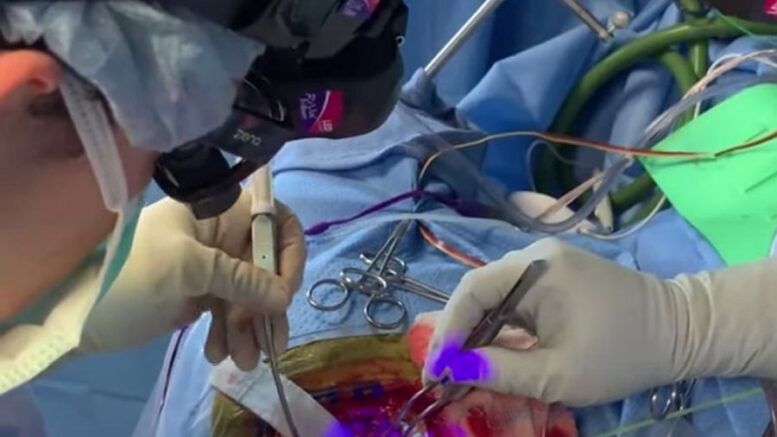
Reveal FGS combines specialty illumination and unique optical filters to give tumor surgeons optimal lighting conditions, allowing them to operate more quickly and with “added emphasis on efficient fluorescence-guided procedures in brain tumor surgery,” according to a company statement.
Among the next-generation system’s specific targets: glioma, a nefarious tumor known to develop in the brain and spinal cord. Glioma – which affects about 12,000 U.S. patients annually, representing about one-third of all brain tumors – spreads finger-like projections through otherwise healthy brain tissue, making it extremely difficult to remove.
Enter the Reveal FGS System, which targets the “rare orphan disease” – essentially, diseases that don’t affect enough patients to attract the attention of major pharmaceutical companies – and does so at a fraction of the cost of comparable technologies, according to Ken Bragança, Designs for Vision’s vice president of operations.
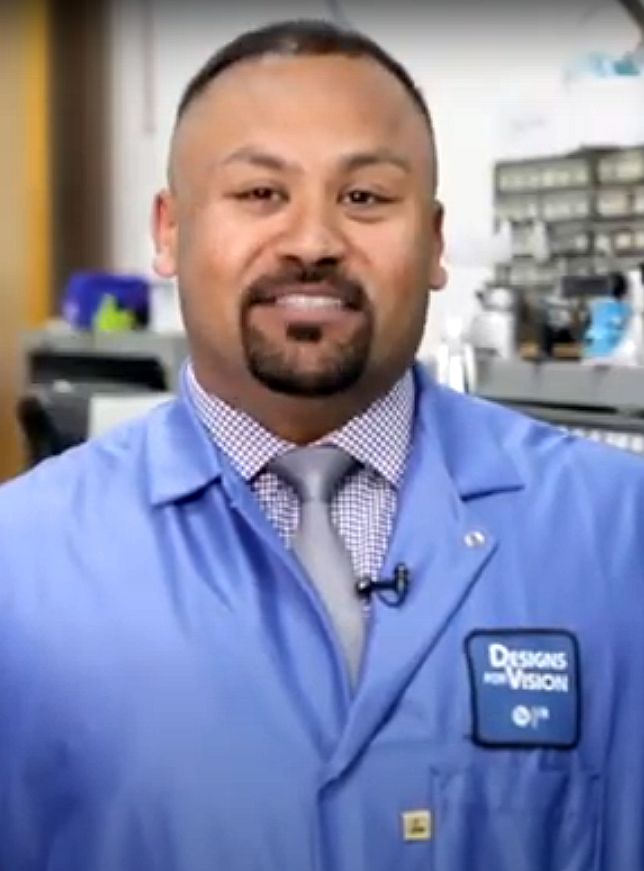
Ken Bragança: Better brain surgery for all.
“Reveal FGS System … makes fluorescence-guided surgery more accessible by lowering the entry cost to a fraction of the previous technology,” Bragança said. “Rather than just the largest, best-funded hospitals being able to provide this technology, the Reveal FGS System brings the miracle of fluorescence-guided surgery to all hospitals.”
Fluorescence-guided surgeries, in which patients are administered an “optical imaging agent” that’s absorbed by a tumor and imaged using specific light wavelengths, were first used in the United States in the middle of the 20th Century. In Europe, surgeons have been using the technology to target brain tumors for decades.
But the use of FGS for brain surgeries was only approved in the United States a few years ago, placing the Reveal FGS System ahead of the domestic curve.
“Reveal FGS … is a refinement of fluorescence-guided surgery equipment,” Bragança noted. “Many doctors who’ve tested the system say that it significantly reduces the time of surgery by minimizing the set-up and relocation of the microscopes, and offers a more complete visual field of the operation area.”
The refinements are all hallmarks of Design for Vision’s expertise. Founded in 1961 in Buffalo by pioneering optometrist William Feinbloom – inventor of the modern contact lens, among other optical advances – the Bohemia-based company spent decades focused on the visual acuity of patients; today, including research and manufacturing partnerships with major corporations like Japanese multinational Hitachi, the manufacturer specializes in technologies for healthcare providers, with more than 100,000 specialized optical products in use by surgeons and dentists.

William Feinbloom: Man of vision.
The Reveal FGS System combines a blue light emitter with wearable lenses incorporating innovative “high-band pass filters,” electronic filters that attenuate signals at specific frequencies. Combined, the technologies allow neurosurgeons to see a tumor’s exact pattern and differentiate it from healthy tissue, while facilitating “greater flexibility of movement” for the surgeons, who can view tumors “from greater ranges of angles and positions than they would via a fixed microscope,” according to Designs for Vision.
Walter Stummer, the president of the German Society for Neurosurgery and chairman of neurosurgery at Munster University Hospital in Germany, worked closely with the Designs for Vision team on the technical specifications.
“We have a certain part of blue excitation light that is strong enough to give you good background information, but not too strong to cloak the red fluorescence,” noted Stummer, who’s credited with developing modern-day fluorescence-guided brain surgery and the lighting and filter standards used to microscopically monitor such procedures.
“The microscope has these very specific characteristics … so we know what we’re seeing as red fluorescence is tumor and what we’re seeing as blue is not tumor,” the scientist added. “That’s why it’s so important that when you construct a new hardware for visualizing, that you maintain these exact characteristics.”
Theodore Schwartz, a neurosurgery professor at New York-Presbyterian Hospital/Weill Cornell Medical Center in New York City, was among the surgeons who tested the Reveal FGS System, which “could have the potential to work for other surgical procedures,” according to Designs for Vision.
As far as its primary application is concerned, Schwartz applauded the device for “increase[ing] the sensitivity and specificity” of fluorescence-guided tumor surgeries.
“With this new Reveal FGS System, [fluorescence-guided surgery] has become even more effective,” Schwartz said in a statement. “[It] allows you to get a greater percentage of the fluorescent light to be visualized.
“I now use the Reveal FGS System as another tool in my approach to remove suspected high-grade gliomas, because (of) ease-of-use and a better overview of the entire operative field,” the neurosurgeon added.





Great Job keep going Mr Ken Braganca Congratulation on the acomplishment
William