By TERRY LYNAM //
Most industry observers agree that artificial intelligence has unimaginable potential to revolutionize medical care – but making AI work in an incredibly complex real-world environment is far from easy.
 AI in healthcare is saving lives today. It’s detecting pulmonary embolisms that are otherwise missed; it’s spotting strokes that would otherwise go unnoticed. It detects breast cancer and all kinds of lesions, it spots cardiovascular risks and other health problems.
“But AI isn’t magical,” warns Marc Paradis, vice president of data strategy at Northwell Holdings & Ventures, Northwell Health’s entrepreneurial arm.
“You don’t simply sprinkle the pixie dust of AI onto the hardest problems and suddenly transform them into easy ones,” Paradis says. “Doing AI right is actually really hard.”
Models that work on test data – that’s “really, really easy,” according to Paradis. But the “dirty little secret” of AI, he notes, is that production failures are common.
“If you give me one hour with your data, I’ll give you 300 models,” Paradis says. “And I guarantee you that I can get at least $1 million in funding for 10 of those models.”
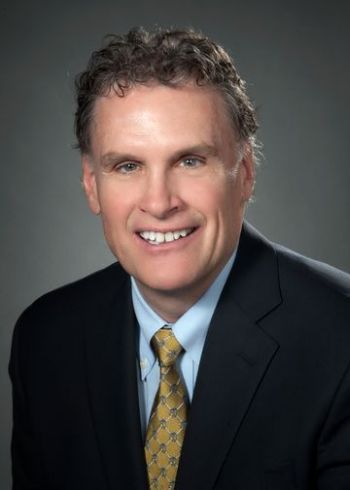
Terry Lynam: Advantageous venture.
Such is the rough-and-tumble AI world, where the vast majority of startups don’t survive a basic lack of funding. The key to success, according to Northwell Holdings & Ventures President and CEO Richard Mulry, is to build AI models from the inside out and work “hand-in-hand with frontline clinicians and administrators who are experiencing these clinical and operational issues firsthand, to identify the inherent problems and potential solutions using real data.”
Last week, Northwell Health and Aegis Ventures, a New York City-based venture capital firm and startup studio, announced a joint venture to develop, launch and scale AI companies focused on healthcare’s most pressing problems – including vexing health disparities resulting in significantly lower life expectancy for Blacks.
Aegis Ventures intends to invest at least $100 million in seed-stage funds in technology startups leveraging Northwell’s vast data stores, accumulated from the health system’s enormous and diverse patient population. Northwell treats more than 2 million patients annually at 19 hospitals and 830-plus outpatient facilities throughout the New York area, including patients from some of the country’s most racially and ethnically diverse communities.
That’s especially important in understanding and addressing the underlying causes of chronic illnesses so prevalent among people of color. With more than 16,600 affiliated physicians, including 4,800 doctors directly employed by the health system, Northwell sits on a stockpile of patient data that – with AI’s help – can identify trends and predict adverse outcomes.
Aegis is already working with Northwell physicians on health inequities involving maternal fetal health. As a first step, they’re looking specifically at preeclampsia, a pregnancy condition causing a sudden rise in blood pressure, generally during the third trimester; if not treated properly, it can be fatal for mothers and babies.
 According to the U.S. Centers for Disease Control & Prevention, preeclampsia affects about one in 25 U.S. pregnancies – but studies show a higher prevalence among non-Hispanic Black women and Native Americans.
The Northwell-Aegis joint venture – which will include data scientists, engineers, clinicians, researchers and patients – will be looking for AI solutions for predicting, diagnosing and treating other medical conditions as well: diabetes, heart failure and kidney disease that disproportionately affect minority populations, along with broader healthcare problems ranging from sepsis to accidental falls.
“The beauty of this (venture) is that it’s problem-led and physician-driven,” Mulry says. “We’re taking real-life medical issues, looking at all of the variables involved in patient care and reviewing and mining patient data to identify trends and evaluate possible solutions.”
AI, he adds, will reveal “patterns that you don’t normally see,” thanks to algorithms that help validate models with actual patient data.
It’s potentially transformation stuff, notes Paradis, that will “absolutely” be a health-equity game-changer.
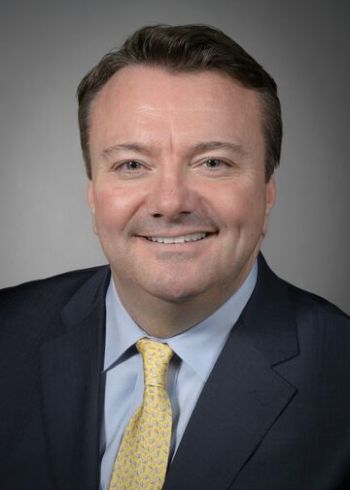
Richard Mulry: Real-world problems, AI answers.
“We don’t know if we’re necessarily going to eliminate [equity issues],” he cautions. “But it will help us develop meaningful tools that we currently don’t have and provide new insight that will lead to better outcomes.”
The joint venture will also use AI to try to eliminate operational inefficiencies in the day-to-day business of healthcare, including hospital admission and discharge processes that routinely back up emergency rooms.
“There are so many aspects of healthcare that could benefit from being streamlined,” Mulry says.
Aegis Ventures’ financial backing and its commercialization experience are key to making the joint venture a long-term success. Because all healthcare providers are grappling with many of the same clinical and administrative issues, a strong investor appetite – hungry for a stake in the AI companies born from the knowledgeable joint venture – is expected.
“This new effort promises to transform the model for innovation in healthcare and improve outcomes for everyone,” says Tom Manning, chairman of the Northwell-Aegis JV and former chairman and CEO of global data analyst Dun & Bradstreet. “But particularly for people who may be lost in the shuffle.”
Terry Lynam is a communications consultant and former senior vice president/chief public relations officer for Northwell Health.