
By GREGORY ZELLER //
New York’s largest healthcare provider is leading a virtual trial of “smart” prescription bottles that address one of the biggest concerns of modern healthcare: “medication nonadherence.”
 Along the way, researchers will take a swing at cardiovascular disease – specifically, its disproportionate fatality rate among Black populations.
The Feinstein Institutes for Medical Research, science arm of the New Hyde Park-based Northwell Health system, is leveraging a $150,000 grant from New Jersey-based TD Bank into a new research program – including a first-ever clinical trial – aimed specifically at mitigating CVD cases in Black communities, and more generally at improving outcomes across the healthcare spectrum.
For starters, a true do-or-die mission: Cardiovascular disease causes 30 percent more fatalities among Blacks than Whites, according to the U.S. Department of Health and Human Services. In response, the Manhasset-based Feinstein Institutes’ fully virtual clinical trial will gauge “smart” prescription bottles that help users follow their prescriptions to the letter.
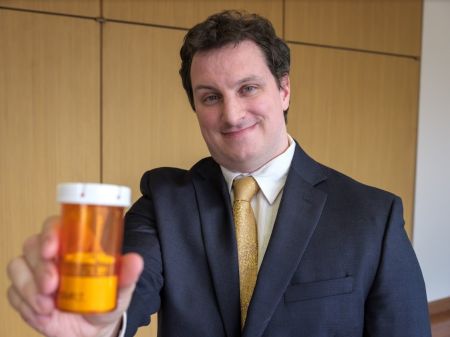
Mark Butler: Help us help you.
The U.S. Centers for Disease Control and Prevention rates “medication nonadherence” as an enormous problem, with one in five written prescriptions never filled and roughly half of those filled taken incorrectly “with regard to timing, dosage, frequency and duration,” according to the CDC.
Those lousy statistics cause sickly ripples throughout the healthcare continuum. But the waters are especially choppy in Black communities, where cardiovascular disease is a leading cause of death – a disparity that “could be addressed” with better adherence to potentially life-saving prescription protocols, according to the Feinstein Institutes.
Enter the smart bottles. Created by New York City-based medication-adherence specialist SMRxT, the wireless bottles collect data on the dosage and timing of oral medication use – for the purposes of this trial, tracking statins (which inhibit “bad” cholesterol production) and other cholesterol medications taken by 42 enrolled participants.
In addition to informing scientists about patients’ self-care habits, the collated data prompts automated text messages reminding users to follow their medication regimen.
By facilitating new patient interaction (and action), researchers hope to “shrink that disparity” in Black cardiovascular deaths, according to Mark Butler, the virtual trial’s principal investigator.
 “Cardiovascular disease is a major driver of death, particularly among people in the Black community,” said Butler, an assistant investigator in Feinsteins’ Institute of Health System Science. “We hope to determine the best intervention strategies to help people stick to their prescribed treatments and improve their cardiovascular health.”
In a society where pandemics spread despite ready access to proven vaccines, it might not shock that “medication nonadherence” is such a problem. But the healthcare community, besides developing and providing good medicines, must also hawk them – and the job here is to better understand “how to promote adherence to life-saving medications,” Butler added.
The CDC notes that “medication nonadherence” is not only patients’ doing: It references “factors along the continuum of care, relating to the patient, providers and health systems,” and the trial aims to fill those gaps as well.
When all is said and done, investigators hope for a 20 percent increase in medication adherence and a bounty of critical intervention intel – for instance, how often reminders should be sent to maximize their effects.
Researchers will also test out specific calls to action – or “multi-behavioral change technique interventions” – designed to prompt positive behaviors. For instance, a text may ask “Did you take your medication as prescribed today?” and require a “Yes” or “No” response.
Senior Vice President Emmet Conlon, TD Bank’s northern market manager for healthcare, said the progressive institution was proud to support efforts to determine why “cardiovascular disease impacts the Black community differently.”
“To improve healthcare outcomes for all, we need to identify innovative solutions that address the inequities that currently exist,” Conlon said in a statement. “We hope that through this investment, we can help identify ways to address inequities and improve health outcomes for vulnerable populations.”