By GREGORY ZELLER //
So, a world-famous billionaire futurist with apparently unlimited resources, an affinity for weed and a continent-sized ego (with a mouth to match) is taking over Twitter – what could go wrong?
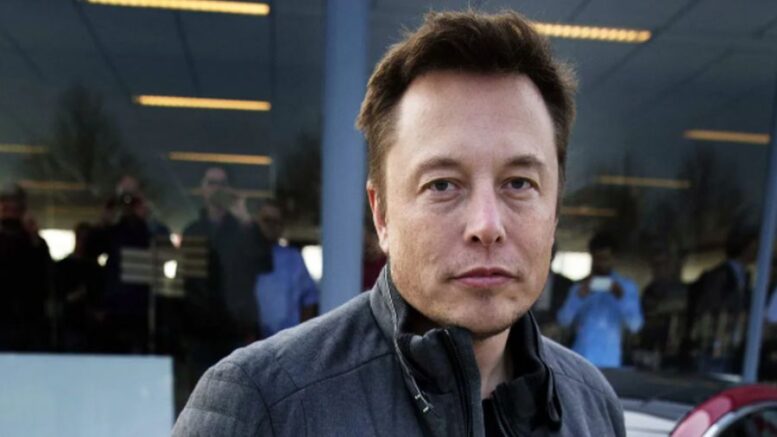
 Plenty, warn multiple media insiders raising red flags since Monday’s revelation that SpaceX and Tesla owner Elon Musk had purchased a 9.2 percent stake in Twitter, and was joining the social media titan’s Board of Directors.
This has, understandably, sent ripples through various circles of power. Many Twitter users, for instance, are already lobbying the magnate – a vociferous champion of free speech who Tweeted in March, “Given that Twitter serves as the de facto public town square, failing to adhere to free speech principles fundamentally undermines democracy” – to reinstate former President Donald Trump’s suspended account.
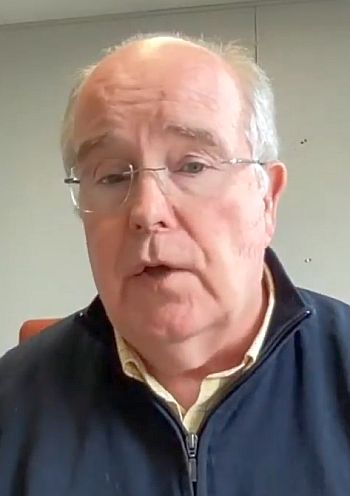
Terry Sheridan: Think for yourself.
Others insist Musk wouldn’t make a $3 billion investment to just sit back and watch, and indeed, the billionaire disruptor has been quick to promise “significant improvements” at Twitter (and file SEC paperwork proving his hands-on intentions).
Among his first acts as a board member was to poll his millions of Twitter followers about a much-debated “edit” button for users, prompting Twitter to quickly note for the record that it was working on just such a long-demanded upgrade (the company insists its edit-button planes were already in the air, and not a response to Musk’s stirrings).
Musk, to be clear, is not becoming the de facto Twitter boss (Chief Executive Officer Parag Agrawal still holds the reins). But his gravity cannot be ignored – and for a resourceful icon whose own Twitter history is spotty at best, that influence is immediately troubling to many media observers.
Their evidence includes Musk’s 2018 Tweet noting he had “funding secured” to privatize Tesla, leading to Securities and Exchange Commission charges that he’d defrauded the market – and a 2019 settlement requiring that lawyers vet the bulk of Musk’s corporate tweets before posting.
There’s also Musk’s thorny habit of spreading COVID-19 misinformation via social media. Despite claims that he’s now fully vaccinated, the billionaire said he wouldn’t get vaccinated during a 2020 podcast in which he downplayed COVID’s severity; as recently as December 2021, he retweeted an anti-vax meme.
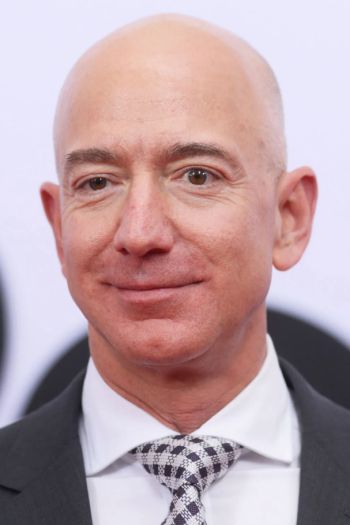
Jeff Bezos: Paper chase.
Critics of Musk’s Twitter foray see a pattern that raises huge questions about the billionaire stoner spaceman’s slow-burn influence over one of the planet’s busiest communications channels – specifically, whether he’ll steer Twitter clear of potentially deadly disinformation campaigns, or jump in with both feet.
Terry Sheridan, managing editor of Connecticut-based WSHU Public Radio and a frequent lecturer at the Stony Brook University School of Communication and Journalism, finds the whole thing “fascinating” – though hardly unprecedented.
From William Randolph Hearst to Amazon founder Jeff Bezos (who purchased The Washington Post in 2018) and Salesforce co-founder Marc Benioff (who purchased Time magazine in 2018), there’s a long history of the mega-rich investing in media outlets (with varying levels of success).
“It’s not unusual for people of means, people with money, millionaires, billionaires, to try to buy some sort of media outlet to influence the conversation,” Sheridan said, though Hearst and his modern brethren never enjoyed the reach Twitter affords Musk (save, perhaps, Australian American media mogul Rupert Murdoch, who owns hundreds of local, national and international media outlets).
“This affects anybody who uses Twitter,” Sheridan noted. “Now, Elon Musk has a say in how the Twitter platform is operated.”
 Considering Musk’s own social media history, the biggest risk may be to “people who get their news online,” according to the public radio veteran, “especially (people) who get their news via social media.”
“They need to be somewhat skeptical where the information is coming (from),” he said. “I’m not saying be cynical – I’m saying to make sure you check the information out, evaluate it for yourself.”
Whether it’s Elon Musk or anyone else deciding what qualifies as news – and how it should be presented – the best approach is to “be educated about what you read, and be proactive,” the SBU lecturer added.
“Don’t let the news wash over you,” Sheridan said. “Be proactive in trying to understand it and figure it out.”