By DAVID HAMILTON //
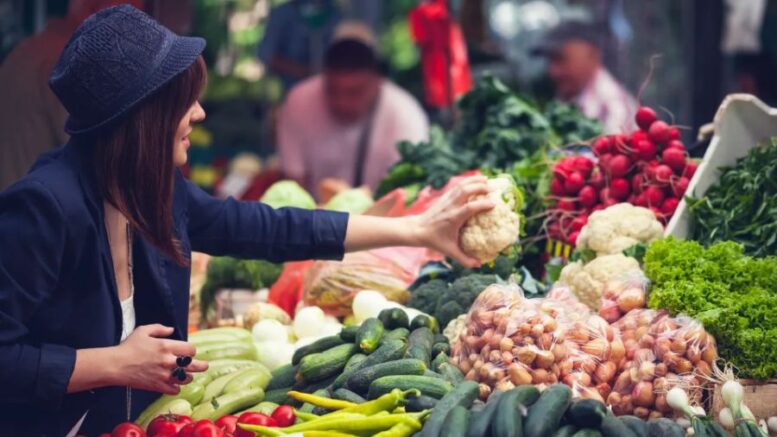
Spring has fully sprung and summer is near – and that means sunny mornings, high pollen counts … and farmer’s markets!
 Farmer’s markets have become a staple in the lives of many Long Islanders. I remember the excitement I shared with my wife, Kim, when we saw signs announcing the Three Village Farmer’s Market in East Setauket was opening June 3 – it was like the clouds of winter had parted and the healing sun was shining on us from above. I could almost hear trumpets.
Crisp veggies, homemade hummus, perfect pickles, mouthwatering empanadas … ah, the good life was back. We could get our specialty goods again, fresh as they get.
As consumers, we consider farmer’s markets our best chance to get both organic foods and unique specialty foods – things you just can’t get in a supermarket.
That makes a trip to the farmer’s market an event. You plan it. You get excited to go. You grab breakfast and make a morning of it. This is no regular supermarket run. No, no … this is a glorious adventure into the unknown, about trying new things and meeting new people.

David Hamilton: Farm hand.
For the really curious (or the economic-development insider), it’s a chance to talk to vendors, find out where they’re from and why they sell what they’re selling. Kim and I have met some really cool people, doing something different, selling something innovative, giving us interesting looks into a different world of foodstuffs.
Of course, these cool and hip vendors, always happy to smile and chat and make your farmer’s market experience a good one, are among the hardest-working of all entrepreneurs. By and large, they’re trying very hard to grow their businesses, and farmer’s markets are a critical forum for them.
More than a chance to make a few sales, the markets help them meet their customers – especially the curious ones who ask a lot of questions. Every sale is a new relationship, and every new relationship is a step toward becoming the next Tate’s Bake Shop or Chobani.
Prior to getting involved with the Calverton Incubator, I never realized how important farmer’s markets were to the fledgling businesses you meet there. Now I really get it. They provide taste-tests (customer sampling of new products), market research (what sells and what doesn’t, in which sizes and packages) and a direct line of communication to the people who matter most – the customers, and potentially a fanbase that can move products into established stores.
Yes, folks, you’re the guinea pigs – the experimental subjects that help these companies grow. But you don’t seem to mind: The New York State Department of Agriculture and Markets reports 400-plus farmer’s markets, 250 farmstands and 10 “mobile markets” on the books.
That’s a lot of business – and it does a lot of good, according to the department, which notes that farmer’s markets “expand sales, promote improved nutrition and help increase consumption of locally grown fresh fruits and vegetables.”
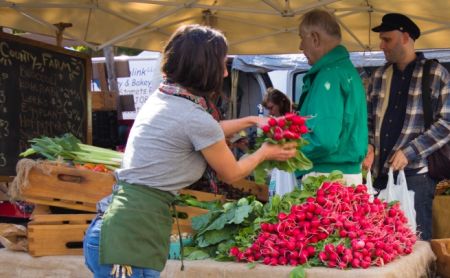
Up and running: New York State counts more than 400 farmer’s markets open for business.
More importantly, the department adds, farmer’s markets provide important economic, educational and social benefits for numerous communities on Long Island and beyond.
Who knew our Friday afternoon jaunt to East Setauket or a Sunday morning coffee stroll through the Huntington Village market had such an impact?
Actually, the team at the Calverton Incubator did, and so do many of our companies. We have food enterprises participating in farmer’s markets all across Long Island, including the East End Food Market in Riverhead and markets in Babylon and Huntington.
Our companies have found seasonal East End markets to be critical, especially during the busy summer months. To help them move forward, the Calverton team has developed strong relationships with the managers of these markets, working hard to promote our companies and drive their acceptance as vendors.
Our companies also interact among themselves, sharing insider info on which markets provide the best exposure and which are more profitable for particular products. Companies such as Peppered Fern (gluten-free vegan sweets), Family Grubb Hubb Eggcellent Quiche (awesome egg pies), Mila’s Puffs (gluten-free creampuffs), Peck’s of Maine (jams and jellies) and Afragola Dolce (wholesome desserts) have all built a faithful following and furthered their success at these events.
So, as you stroll your favorite farmer’s market and soak up the warm weather, the festive atmosphere and the incredible food, please remember you’re helping out a critical and thriving economic ecosystem – and those cool folks on the other side of the table desperately need your support.
And embrace being the guinea pigs! At least we’re well-fed.
David Hamilton is the interim program manager of Stony Brook University’s Food Business Incubator at Calverton.