By GREGORY ZELLER //
Which of these Clean Energy Business Incubator Program companies is not like the others?
 It sounds like a children’s game, but Plainview-based Edgewise Energy truly stands out among the 12 companies currently benefitting from Stony Brook University’s CEBIP, the famed “incubator without walls” and cornerstone of the university’s multifaceted commercialization ecosystem.
First and foremost, Edgewise Energy wasn’t even Edgewise Energy when it joined the clean-energy business incubator in 2016 – it was 2015 startup Interlogic, an energy-tech looking to “deploy small-scale residential fuel cells at scale,” according to cofounder Sammy Chu.
Bringing such advanced technologies to market is a Herculean challenge – lessons learned firsthand by Chu and cofounder James Emlock, who soon saw the forest for the trees and recognized an even more intriguing opportunity: becoming middlemen, of sorts, between sustainability-minded property owners and next-generation energy enterprises, including those cutting their teeth at CEBIP.

Sammy Chu: Now for something completely different.
Enter Edgewise Energy, a business consultancy that customizes efficiency opportunities for property owners by evaluating the latest policy, technology and finance options.
And there’s the CEBIP rub: Whereas most of the incubator program’s companies are developing their own cutting-edge technologies, Edgewise is no longer a tech firm. Instead, its founders’ technological and business-building savvy is focused on familiarizing landlords with fuel cells and other state-of-the-art solutions – a “business-model innovation company,” according to Chu, who succeeded Emlock as CEO in 2018.
“CEBIP is obviously geared toward technology, but many of the challenges that those startups face are very much applicable to us,” noted Chu, who is also chairman of the U.S. Green Building Council’s Long Island Chapter. “And in terms of the program’s goals, we are very much in the same category – working to drive clean-energy deployment.”
Furthering its internal innovation, Edgewise Energy also expanded on Interlogic’s initial residential focus. Edgewise keeps up with ever-changing government regulations, new financing options and tech developments affecting both residential and commercial properties.
“Rather than focusing only on the residential sector, we’re also focused on monetizing and optimizing revenue for commercial real estate,” Chu said. “That’s how we ended up building a unique platform that combines fuel cells with community-distributed generation – something that Long Island hasn’t seen before.”
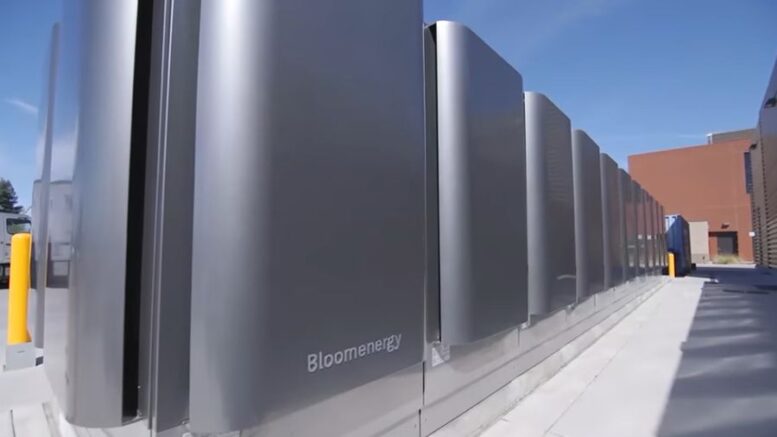
 Along with California-based project partner Bloom Energy, Edgewise Energy is planning a 7.6-megawatt fuel-cell farm for an underused parking lot along Melville’s Route 110 corridor. When completed, the farm – what Bloom calls an “energy server” – is projected to inject electricity directly into the Long Island Power Authority grid and give qualified residential subscribers a 10 percent break on their energy bills, with no additional equipment installations.
Branded as Community Power LI, the fuel-cell farm is slated to be up and running later this year – and will prove to be a critical piece of Long Island’s energy-efficiency puzzle, according to Chu, who also serves as vice chairman of the Suffolk County Planning Commission.
“We’re not looking to compete with solar,” he noted. “We very much believe that if people have the means to put solar in their house, they should.
“But a lot of people can’t do that, like renters or people who don’t otherwise have the means,” Chu added. “This is meant … to give them a chance to be part of the clean-energy movement and realize some clean-energy savings.”
That sort of spread-it-around, hang-together thinking is exactly the big picture Edgewise Energy was formed to promote – and precisely why its continued participation with CEBIP makes perfect sense, according to Chu, even if the second-stage startup doesn’t perfectly fit the incubator program’s tech-first profile.
“[The incubator] was an invaluable asset as we navigated the challenges that face clean-energy startups … and the CEBIP staff always does a great job of facilitating industry relationships,” Chu said. “It’s also really helpful to be connected to a peer group of other clean-energy startups.
“A clean-energy startup can be a very lonely place.”