By JEFFREY REYNOLDS //
If mere mention of “magic mushrooms” brings you back to blacklight posters, lava lamps and the rhythmic snare drum of Jefferson Airplane’s “White Rabbit,” you’re not alone – and you’re probably over the age of 50.
 Today, ’shrooms are making a comeback, along with LSD, MDMA and other hallucinogens. Not as recreational drugs, but as potential treatments for a wide range of mental-health conditions.
Numerous studies have reported encouraging outcomes using psilocybin – mushrooms’ main psychoactive compound – for treatment of depression, anxiety and alcohol dependence. It’s even effective for smoking cessation and migraine therapy.
Meanwhile, ongoing and planned clinical trials are testing hallucinogens for conditions that include opioid dependence, Post-Traumatic Stress Disorder and anorexia nervosa.
The U.S. Food and Drug Administration is expected to approve MDMA for treating PTSD and psilocybin for treating depression within the next two years, while federal funding for psychedelic research recently restarted after a 50-year “war on drugs” hiatus.
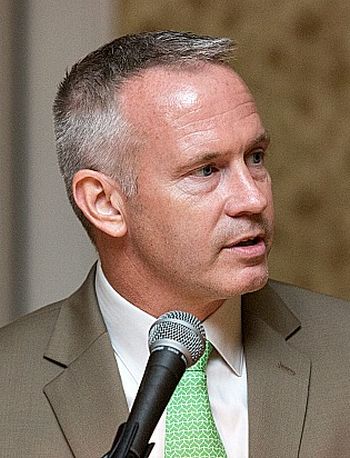
Jeffrey Reynolds: Shroom with a view.
Dozens of publicly traded psychedelic startups have landed more than $1.8 billion in private capital and influencers like Tim Ferriss are changing minds about the drugs our parents warned us about.
The increased investments are welcome because, despite the hype, most scientific studies have been limited to animals and small human cohorts – details that typically get lost as mainstream media outlets and entrepreneurs trip over themselves trying to rebrand psychedelics.
The limited testing hasn’t slowed plant-medicine marketers, who are already cashing in by offering guided psychedelic trips, Ketamine-fueled journeys in zero-gravity chairs and pricey “psychedelic retreats” (choose from Costa Rica or the Catskills).
The promotional promises of finding peace, comfort and connections to a higher level of consciousness echo 1960s counterculture, but unlike the mind-bending adventures of Harvard psychologist Timothy Leary, the retreats are unregulated, the “healers” are unlicensed and the stock-photo “shamans” aren’t going to save you from a bad trip.
It’s not all peace signs and rainbows. Psychedelics can trigger psychotic episodes in those with certain neurological predispositions and can be traumatizing or otherwise harmful if taken without proper preparation, the guidance of a trained therapist and an appropriate debriefing.
Participants also need to discontinue the use of traditional psychotropic medications – antidepressants, anti-anxiety drugs and antipsychotics – which can be destabilizing at best.
See the change: The quality of a psychedelic experience — even a therapeutic one — is based on many factors.
Reports of sexual abuse and violence during ayahuasca ceremonies at psychedelic retreats have climbed. Post-retreat suicides have also been reported and hyper-suggestable participants have fallen prey to financial exploitation.
Participants under the influence of psychedelics are vulnerable, but it’s in this transient state where they can better access and process memories, feelings and past trauma, and potentially re-emerge with fresh perspectives that are freeing and healing.
At the risk of oversimplifying complex brain science, psychedelics typically stimulate the creation of new neural pathways in the brain, while the resting state of the brain loses connectivity – before restoring itself, akin to rebooting a computer.
Potent drugs like psilocybin and MDMA aren’t being investigated as cures for mental illness, per se, but as an adjunct to traditional therapies, including psychotherapy.
Bold names like Maryland-based Johns Hopkins Medicine have been in the psychedelic research business for years already; closer to home, the New York City-based Icahn School of Medicine at Mount Sinai recently launched a Center for Psychedelic Psychotherapy and Trauma Research, while NYC-based NYU Langone Health has established its own Center for Psychedelic Medicine.
Researchers from NYU recently bemoaned a “psychedelic hype bubble,” observing that “a disturbingly large number of articles have touted psychedelics as a cure or miracle drug” and warning that “extreme shifts in perception can create impediments to rigorous science and reasonable clinical applications.”
That would be a shame. Millions of Americans who suffer from devastating, disabling psychiatric disorders aren’t looking for utopia. They just want some relief.
Jeffrey Reynolds is the president and CEO of the Garden City-based Family and Children’s Association.