By GREGORY ZELLER //
Stony Brook University is getting a running start on the next COVID-level crisis.
 A $3 million grant from the National Institutes of Health’s National Institute of Allergy and Infectious Diseases will support facility upgrades and new instrumentation inside the Renaissance School of Medicine’s Laboratory for Comparative Medicine.
It’s been a busy stretch inside the LCM, which conducts basic, translational and preclinical research on SARS-CoV-2 – the viral agent behind COVID-19 – and other infectious agents, as well as critical research on tuberculosis and multiple tick-borne pathogens.
The new NIH funding – greenlighted by NIAID Director Anthony Fauci – will continue years of work on three different RNA virus families, all of which relate to the American Pandemic Preparedness plan introduced by the White House in September 2021.
The plan, which stemmed from a whole-of-government review and update of U.S. national “biopreparedness” ordered by President Joe Biden in January 2021, is organized into five basic pillars: transforming medical defenses, ensuring situational awareness, strengthening public-health systems, building core capabilities and “managing the mission.”
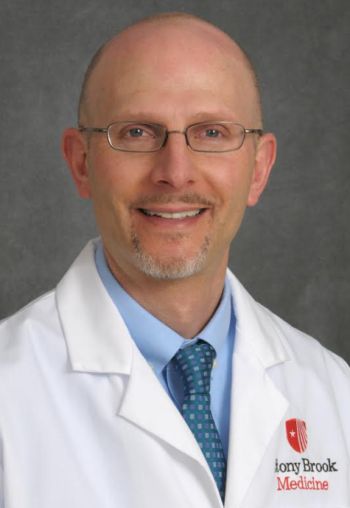
David Thanassi: Expansion plan.
Stony Brook Medicine’s competitive grant – issued in response to an NIH call for emergency awards targeting “biocontainment facility improvements” and “building system upgrades to support pandemic preparedness” – will cover physical upgrades and new equipment inside the LCM, all focused on the study of emerging virulent pathogens and other advanced virus research.
Supporting current and future investigations of breakthrough antiviral programs, experimental antimicrobial approaches and cutting-edge therapeutics is critical to mitigating – even preventing – future infectious-disease outbreaks, according to LCM Scientific Director David Thanassi, principal investigator behind the $3 million grant award.
“This award enables us to make infrastructure improvements and acquire new scientific instrumentation to expand our capabilities to perform research on highly pathogenic agents,” noted Thanassi, who also chairs the Renaissance School’s Department of Microbiology and Immunology.
“This is truly a key step toward pandemic-preparedness,” Thanassi added. “[It] provides enhanced resources to not only Stony Brook researchers … but also state and regional investigators working to combat current and future pandemic threats.”