By TERRY LYNAM //
Kelly Owens is the posterchild for bioelectronic medicine.
 Bioelectronics is a rapidly emerging medical field wherein precise electrical stimulation is used to diagnose and treat chronic conditions. And Owens’ hard-earned title is anything but cliché.
She’s now five years into complete remission from the debilitating effects of Crohn’s disease and inflammatory arthritis – conditions that caused constant, excruciating pain in her joints and spine, making it difficult even to walk.
Her bioelectronic bounce-back continues to make national headlines. And Owens, now 34, continues to benefit from this revolutionary medical field, in more ways than one: Five years after participating in a vagus-nerve stimulation trial that changed her life, she’s become a self-described “bioelectronic medicine consultant,” on a personal and professional mission to advance bioelectronic research and expand access to its unique therapies.
Owens hears regularly from people across the country and around the world, all suffering from a litany of diseases that pharmaceutical drugs haven’t treated effectively. Many are desperate to learn if bioelectronic medicine – alternately known as “electroceuticals” – can be their savior.
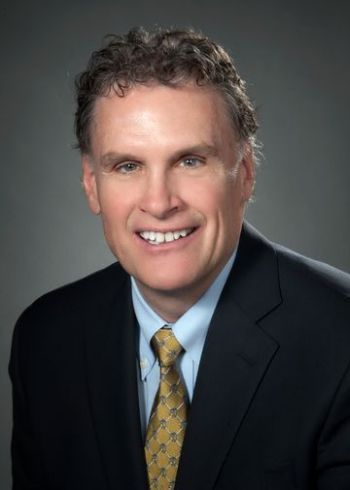
Terry Lynam: Futurist.
The consultant keeps a database of 1,500 people who’ve contacted her so far and continues to be a firm believer in the technology’s promise. But the unfettered enthusiasm she felt five years ago – when she thought her own story would accelerate patient access to these therapies – has been dampened by a frustrating regulatory review process.
It takes many years for medical advancements to reach the bedside. And these days, when Owens hears from those like her former self – people searching frantically for medical miracles – she’s cautious with her optimism.
“With the advocacy, it has been a hard balance between highlighting the wins that I’ve had – to give people hope – but not harping on them for too long, because it can also make people feel bad,” Owens says. “I don’t want to get their hopes up that something is right around the corner when it’s still got a way to go.”
Make no mistake, because of its potential to transform healthcare by reducing or eliminating the reliance on pharmaceutical drugs, bioelectronic medicine is surging. As of 2021, it had grown into a $20 billion-plus market that some analysts projected could exceed $60 billion by 2029.
Much of this growth is driven by prominent medical-device manufacturers like Medtronic, Abbott Laboratories and Boston Scientific, as well as a growing number of startups that raised a record $25 billion in 2021.
While doctors have used electrical stimulation for many years to treat patients with epilepsy, Parkinson’s disease, back pain, heart conditions (think pacemakers) and other diseases, there are now 177 active or pending research trials worldwide – about half in the United States – exploring a dizzying number of conditions, ranging from snoring and migraines to cancers and autoimmune disorders, like those that afflicted Ms. Owens.
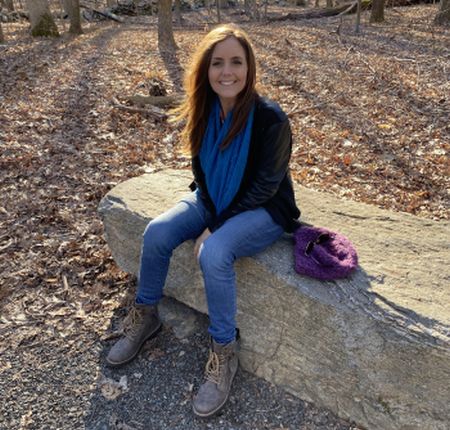
Feeling better: Owens, who is in complete remission from Crohn’s disease, laments the slow pace of medical-science commercialization.
Northwell Health’s Feinstein Institutes for Medical Research has been at the forefront of bioelectronic medicine research, thanks to two primary discoveries over the past 20 years by President and CEO Kevin Tracey and fellow researchers: that inflammation is present in virtually all diseases, and that it can be controlled through the vagus nerve, the information superhighway between the brain and internal organs.
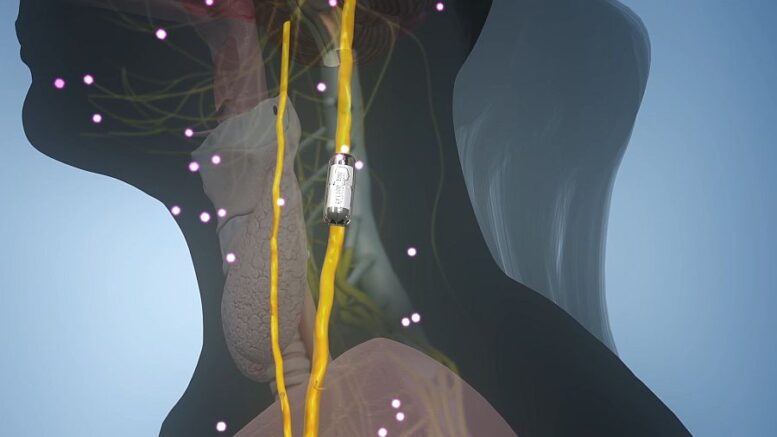
By sending tiny electrical shocks to the vagus nerve, researchers believe they can regulate how the body’s immune system responds to infection, tissue injury and inflammation, essentially creating an “off-switch” for chronic illnesses. And Feinstein researchers are working hard to prove it.
In late October, the Feinstein Institutes received a $6.7 million National Institutes of Health grant for a three-year project designed to create the first anatomical map of the vagus nerve system. Meanwhile, researchers at the Feinstein’s Institute of Bioelectronic Medicine, led by Yousef Al-Abed and Lopa Mishra, are closely monitoring a pivotal clinical trial being conducted by Los Angeles-based SetPoint Medical, which Tracey cofounded in 2007.
The trial is enrolling up to 250 rheumatoid arthritis patients at sites around the country. SetPoint’s technology platform, which relies on a small electrical stimulator surgically implanted in the neck, is based Tracey’s 2002 discovery of a new biological pathway called the inflammatory reflex – and the crucial insight that curbing inflammation is critical to treating most diseases.
Owens eagerly awaits the day when these treatments will be readily accessible to everyone. But for now, she says, it’s kind of “the Wild West,” insofar as what does and doesn’t rush to market.
“There’s a lot going on in so many different spaces, and so it’s really good because it’s opening up the field so much,” Owens notes. “But at the same time, it really is [a matter of] what’s got the mechanism to back it up, and what doesn’t.”
This has given the posterchild a particular insight. “When I’m at conferences or hear someone talking about a device,” she says, “I’ll always pay attention to whether they spend more time describing the science or the commercialization.”
In other words, are they more interested in making money – or curing the sick?
Terry Lynam is a communications consultant and former senior vice president/chief public relations officer for Northwell Health.