By DAVID PENNETTA //
Nothing like nice weather and more daylight to get us thinking green.
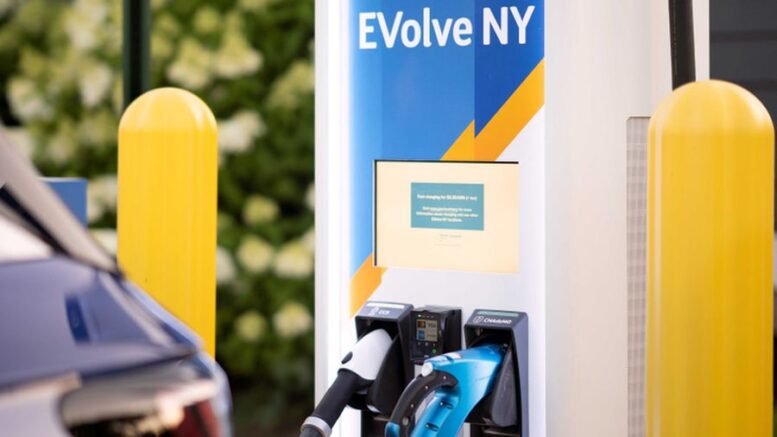
 That’s good, because Gov. Kathy Hochul’s office has laid out some aggressive plans for new zero-emission-vehicle infrastructure, with a big push between 2025 and 2035.
Also good – green is the way to go. But first, let’s consider: What is “green,” exactly?
Solar panels come to mind. We see them all over our residential neighborhoods now. Wind power, fuel cells, geothermal energy, hydropower, even next-generation battery-storage – all are green-energy sources.
Seems like a lot of options, but even they aren’t enough – at least, not as standalone technologies. They can only replace our fossil fuel-powered grid if they’re knitted together and working in concert.
So how do these technologies work together? Well, solar panels have peak output when the sun is high. Wind power is most active with changes in light and corresponding heat, which occur at both dawn and dusk.
David Pennetta: Green machine.
Luckily, we live on an island, yielding this extra benefit: Land and water warm up and retain heat at different rates. At dawn, when we go from dark to light, land areas heat up quicker than surrounding waters, creating an air-pressure increase – and an offshore wind – and at dusk the land mass loses heat quicker than water, creating an onshore wind.
The key term here: Wind!
Combined with solar sources, we have some synergies happening where there is full energy coverage from dawn all the way through dusk. But what happens at night, when people and businesses still need light and power?
Battery energy storage, which can charge itself off the grid during the day and feed the energy back to the grid at night.
There are many technological hurdles. Old and obsolete grid infrastructure needs to be more robust, with more entry points into the substations and transmission lines with headroom, meaning a capacity to either give or receive power above user demand.
Unfortunately, land-use authorities like local planning and zoning boards, as well as civic associations and resident groups, also present plenty of obstacles.
Americans have showed a willingness to pay a premium for electric vehicles. The next question is, are they willing to pay more for residential housing or commercial buildings?
Developers won’t go green unless it makes them some green. Why would a developer fully electrify every parking space in a parking lot when only 7 percent of Americans drive electric vehicles?
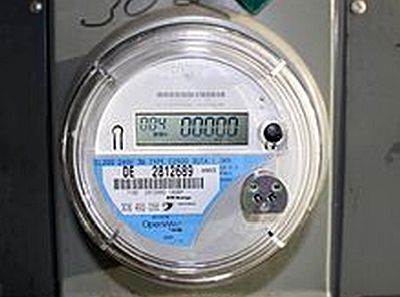
Smarter than it looks: A meter made for conservation.
Yet, there are several Long Island projects that make room for greater conservation. The Wolkoff family’s multiuse Heartland Town Square project in Edgewood and the residential/commercial Station Yards development in Ronkonkoma are just two examples.
Heartland is located near a train station, built specifically to reduce the number of cars on the road and provide walkable services. Station Yards is located at a multi-modal transportation hub, putting Manhattan and Sag Harbor within an hour’s reach.
Meanwhile, at both Station Yards and its Bayshore development, developer Tritec is laying electrical infrastructure for future car-charging stations – and has migrated to fully electrically powered home appliances and HVAC systems. The builder is also eyeing smart electricity power meters, which among other things can monitor peak-demand times and hunt for cheaper kilowatt-hour rates.
Meanwhile, there are federal, state and county incentives – plus programs available from PSEG, LIPA and NYSERDA – to help accelerate new green infrastructure throughout the region.
And private companies are on the case, like Plainview-based Edgewise Energy, which has found a niche advising developers about incentives, new technologies and other ways to leverage green ideas into their work.
There’s lots of green thinking to do, during the sunny spring and always. And we need to do it – we must conserve to preserve our planet, our island and our quality of life.
David Pennetta is executive managing director of Cushman & Wakefield’s Long Island office and co-president of the Commercial Industrial Brokers Society of Long Island.