By DAVID PENNETTA //
You might want to rethink your steadfast refusal to return to an office environment.
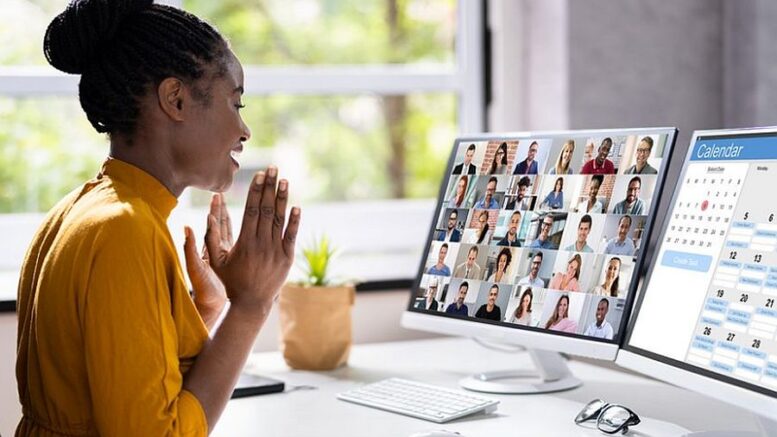
 The pandemic’s work-from-home phenomenon caused seismic shifts across mentalities, processes and technologies, including technologies now present in households around the globe. In 2019, just 5.7 percent of the U.S. workforce worked remotely; by 2021, 17.6 percent of us were logging in from home.
Certain job functions already lent themselves remote work, even before the pandemic: sales, customer service, data entry, even specialties like freelance writing. Since COVID, the prevalence of remote-work arrangements has varied depending on the industry, the organization and the location – though it’s obviously become a lot more common.
If the pandemic had occurred even a decade sooner, remote work would have been much more challenging and much less feasible for most workers and most organizations. The shift would have been slower and more difficult to implement. The required technologies – high-speed Internet, videoconferencing, cloud-based collaboration tools – weren’t widely available. Many workers would have struggled to access the resources and digital infrastructure needed for effective remote work.
The right tech has made the transition easier – though many are still readjusting.

David Pennetta: Remote control.
Remote work has been a challenge for many employers. Even if they overcome fears of reduced quantity, quality and efficiency, many bosses are now realizing that without in-person collaboration and nurturing, they’re struggling to identify future management candidates and future partners. Others cite difficulties communicating their corporate culture.
Employees, also, are developing concerns about not being in the office: feeling isolated from the world and disconnected from colleagues, struggling to separate their professional and personal lives, grappling with technology and communication challenges, missing collaboration and networking opportunities – and, perhaps most importantly, discovering fewer opportunities for career advancement.
Working from home isn’t the same experience for everyone. Cushman & Wakefield’s Workplace Ecosystems of the Future report found Millennials living in a studio or one-bedroom apartment don’t want to be there all day and younger Gen Xers doesn’t like having their kids zooming around during Zoom calls.
(The most comfortable remote workers, strangely enough, are older Gen Xers and Baby Boomers, who are generally perceived to be the least technologically proficient members of the current workforce but tend to have grown kids and bigger homes with comfy amenities).
Some workers will definitely prefer to stay home – but with both employers and employees not loving remote work as they once did, many employers are using a variety of strategies to encourage workers to return to the office.
 Bonuses, promotions and pay raises are all fair game; better collaboration through redesigned office spaces is also in play. Some companies are installing game areas to encourage team-building and socialization.
Jed Dallek, a tax partner at Woodbury-based Gettry Marcus, said his accounting firm started offering work-from-home flexibility at the start of the pandemic and has stuck with it.
“The company has added more remote employees as well as developed a staff working in India at reduced salary rates,” Dallek says. “This has been quite successful and is being further developed using state-of-the-art technology.”

Jed Dallek: Passage to India.
All things considered, the global shift toward “hybrid schedule” seems to be working out. But beware, employees – these waters may be more dangerous than they seem.
When companies decide to downsize or restructure their workforce, remote workers may be more vulnerable thanks to lower visibility and higher technology-management costs. The specter of reduced performance – whether real or earned – looms.
Meanwhile, Gettry Marcus isn’t the only firm utilizing workers from other countries in this new remote world. And while it’s working out for the accounting firm, “It is apparent that new-and-improved training is needed to improve communication skills necessary to work in this new environment,” according to Dallek.
The global shift to remote work has brought about many significant changes. As we navigate this evolving landscape, it’s crucial for employers to adapt and find the new strategies that work best for them – and for employees to remember that if the boss never actually sees them, it really doesn’t matter if they’re 8,000 miles away.
David Pennetta is executive managing director of Cushman & Wakefield’s Long Island office and co-president of the Commercial Industrial Brokers Society of Long Island.