By LAURA CURRAN //
It is crucial that the United States maintains and strengthens its technological edge to confront the threats of the 21st Century.
 Suffolk County is still restoring IT services after a months-long cyberattack and massive data breach crippled county offices. County officials partnered with private industry to address network vulnerabilities and confidently restore and update government systems.
Collaborations like this between local, state and federal governments – and coordination with tech industry leaders – are the keys to securing the nation’s critical IT infrastructure.
A month ago, our country collectively remembered and mourned the lives lost on 9/11. Since that terrible day 22 years ago, federal, state and local law enforcement and national security agencies have learned to collaborate and share intelligence to ensure new threats are swiftly and effectively countered.
Decades later, the nation finds itself fighting a new war. Cyberattacks from geopolitical rivals like Russia and China, alongside state-affiliated groups and non-state actors, threaten the security and stability of the crucial networks running our energy, business and government sectors.

Laura Curran: In it together.
The motivations behind these attacks are often political, like disinformation campaigns, or profit-driven, as with actors in the criminal cybermarket. The most viable strategy for combating these shifting and evolving forces is supporting the private sector in developing and deploying new and innovative technologies.
Digital-platform companies are developing several tools to effectively address the cybersecurity needs of both the public and private sectors. Recently, FBI Director Christopher Wray emphasized the private sector’s evolving role in collaborating with the federal government to confront enemies in cyberspace.
During my time as Nassau County executive, I prioritized collaborating with tech leaders in a concentrated effort to educate and train county employees at all levels to recognize and respond to cyberthreats and attacks. After the county comptroller’s office fell victim to a malware incident, I signed an executive order requiring the vast majority of county employees be trained to identify cyberthreats.
The tools provided by the tech industry have evolved by leaps and bounds since I issued that order in 2020. Unfortunately, so have our adversaries’ capabilities.
This year, 300,000 new malware instances – allowing hackers to access IT systems and steal data – are being detected daily. Better than 90 percent are sent through email.
Many government-agency websites are outdated and vulnerable to cyberattacks, while expired plugins and old software can be exploited to allow back-door access for hackers and criminals.
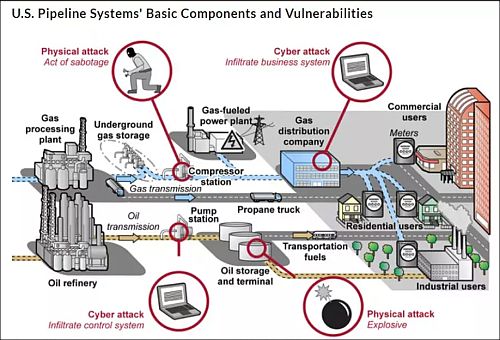
Teaching moment: The Colonial Pipeline ransomware attack taught many important lessons. (Source: U.S. Government Accountability Office)
Today’s software can automatically perform security auditing, carry out penetration-testing exercises and analyze weaknesses in Wi-Fi networks – improvements that provide local, state and federal governments with a vast arsenal in the cyberspace war.
In calling for additional collaboration, Wray cited joint efforts following the high-profile 2021 Colonial Pipeline ransomware attack. In coordination with Virginia-based cybersecurity firm Mandiant (now a division of Google Cloud), the FBI quickly made substantial progress in identifying the cybercriminals and restoring operations.
As Gov. Kathy Hochul recently made clear, it is imperative that all levels of government coordinate strategy and collaborate with the U.S. technology industry to confront the growing threat of cyberwarfare.
As the world’s top innovators, America’s leading digital-platform companies are on the frontlines of this modern battlefield. They must be supported to compete and outperform developers in adversarial countries like China and Russia.
For the sake of the safety and security of all Americans, we must lead the globe in building the next generation of tools to defend against the growing wave of digital warfare.
Laura Curran is a journalist and the former Nassau County Executive.