
By TERRY LYNAM //
Watching videos of Mick Jagger strutting around on stage, it’s hard to believe the Rolling Stones frontman is 80 years old.
 While the rock ‘n’ roll lifestyle has claimed many victims over the decades, it certainly hasn’t hindered Jagger’s mobility or music – as evidenced by the band’s critically acclaimed new album, Hackney Diamonds, featuring the Stones’ first new material since 2006.
Like many aging adults who’ve maintained their vitality, Jagger attributes his current good health to a nutritious diet, a regimen of cardiovascular and strengthen training and regular stretching. He’s had his health scares – the Stones postponed their North American tour in 2019 when Jagger had heart-valve replacement surgery – but his ongoing ability to perform at such high intensity is inspiring to all seniors intent on slowing the aging process.
Obviously, Jagger is notably different from most 80-year-olds when it comes to overall health, physical fitness and, certainly, net worth. As a matter of fact, here in the United States, the contrasts regarding senior health can be particularly striking.
Yes, we’re living longer (the average 65-year-old can expect to live another 18.4 years), but for millions of American seniors, quality of life is severely impacted by neurological disorders (such as Alzheimer’s disease) and mental-health issues, not to mention chronic disease, falls and other issues – nearly 95 percent of U.S. seniors have at least one chronic health condition such as arthritis, diabetes or heart disease, and nearly 80 percent have at least two.
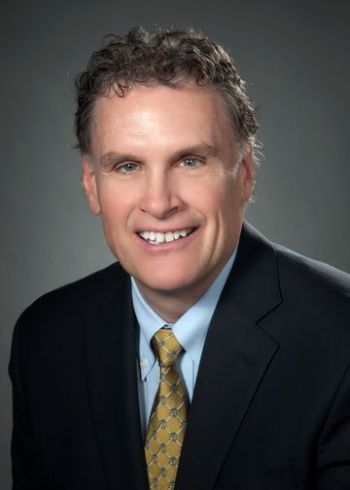
Terry Lynam: Elder statesman.
The senior population surpassed 55.8 million in 2020, about 16.8 percent of the total U.S. population, and 10,000 Americans turn 65 every day. This begs a nagging question: Is the nation’s healthcare system prepared to care for all these people?
Growing old in America presents many challenges, but the medical community has made significant strides over the past half-century in the care of older adults and the education and training of eldercare clinicians.
I have vivid memories of my 82-year-old grandmother, back in the early 1980s, languishing in nursing homes and hospitals after her medical needs became too great for my parents to handle at home. The prevalence of similar heart-wrenching experiences stirred the public consciousness and helped launch a movement to redefine and restructure the institutions responsible for caring for the elderly.
One of the pioneers was Robert Butler, an acclaimed New York gerontologist and psychiatrist who authored “Why Survive? Being Old in America,” a landmark book that won the 1976 Pulitzer Prize for general nonfiction.
“In America,” Butler wrote, “childhood is romanticized, youth is idolized, middle age does the work, wields the power and pays the bills, and old age, its days empty of purpose, gets little or nothing of what it has already done.
“The old,” he added, “are in the way.”
Butler coined the term “ageism” in 1968, defining it as “a process of systemic stereotyping and discrimination against people because they are old, just as racism and sexism accomplish this for skin color and gender.” The founding director of the National Institute on Aging in 1975, he dedicated his career to altering the medical community’s prevailing attitudes toward treating seniors and pursuing lifesaving medical advances.

Gathers no moss: Jagger, 80, can still roll around the stage.
In the ensuing decades, the work of Butler and other gerontologists has reinforced an ethical imperative within the medical community to prioritize eldercare and treat seniors with greater dignity and respect.
To help ensure that older adults receive safe, evidence-based care focused on what matters to them, more than 3,400 hospitals, medical practices and long-term care organizations are now recognized as “age-friendly health systems,” a movement initiated in 2006 by the World Health Organization – and later accelerated by the John A. Hartford Foundation, the Institute for Healthcare Improvement and the American Hospital Association.
Despite that progress, there’s a major and rapidly growing deficiency in all levels of the U.S. eldercare workforce, especially among physicians. This has deepened concerns about the nation’s ability to adequately care for its aging population.
By 2030, when all Baby Boomers will have reached age 65, the U.S. Census Bureau estimates there will be more than 73 million U.S. seniors – about 21 percent of the entire population.
Meanwhile, the Association of American Medical Colleges projects a shortage of up to 124,000 nationwide physicians by 2034, including nearly 48,000 primary-care providers. This creates a very concerning scarcity of geriatricians who specialize in senior care: The American Geriatrics Society estimates there are already fewer than 7,300 practicing nationwide – way less than 1 percent of all U.S. physicians – and projects a need for at least 30,000 by 2030.
Lower compensation is a major driver of persistently low recruitment into geriatrics, (largely because all geriatric patients are on Medicare, which pays less than commercial insurers).
Bolstering the eldercare workforce will require an aggressive national campaign that provides strong financial incentives for geriatricians and advance-practice geriatric nurses – not just higher pay, but student-loan forgiveness, scholarships and stipends, too.
Mick Jagger can still get up and dance, but a lot of seniors can’t, and more are coming. Failure to do something about it now will leave countless elders scrambling to access the care they need, long after Jagger finally drops the mic.
Terry Lynam is a communications consultant and former senior vice president/chief public relations officer for Northwell Health.