
By MICHAEL H. SAHN //
John F. Kennedy was 43 when he said in his 1961 inaugural address that the “torch has been passed to a new generation of Americans.”
 But 63 years later, we enter 2024 anticipating a rematch between two of the oldest candidates ever to seek the U.S. presidency: Joe Biden would be 82 if elected, Donald Trump would be 78 and either would be the oldest person elected to govern the current “new generation of Americans.”
Congress is also old – some call it the “most privileged nursing home in the country.” Even with the recent elections of some younger members, the median age in the U.S. House of Representatives during this 118th Congress is 57.9 years, and the median age in the U.S. Senate is 65.3 years.
Voters are concerned with the advancing years of elected officials, the so-called “age factor.”
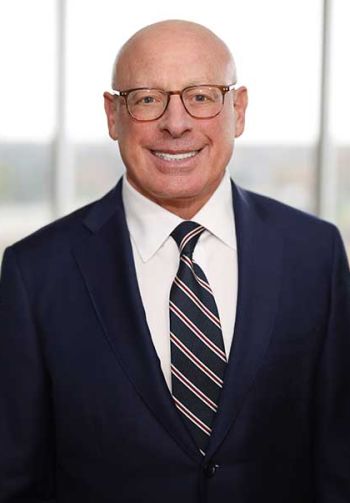
Michael Sahn: Youth unserved.
Age brings experience and wisdom – a benefit that must be balanced against engaging younger Americans in confronting today’s challenges. A majority of Americans wants maximum age limits for elected officials, and 40 percent of those polled want that limit set at 70.
If there was an age limit of 70, neither Biden nor Trump would be eligible to run. One-third of the Senate and better than 15 percent of the House would have to retire.
Enacting an age limit isn’t easy. The U.S. Constitution sets the minimum age for the president at 35 years, for U.S. senators at 30 and for the House at 25. The Constitution is silent, though, on a maximum age to hold those offices.
The Constitution must be amended to set an age limit. This requires a two-thirds vote in the Senate and House, followed by ratification by three-quarters of the States.
Notably, Long Island’s representatives in Washington are younger than many of their colleagues. Nick LaLota (R-NY 1) is 45, Andrew Garbarino (R-NY 2) is 39 and Anthony D’Esposito (R-NY 4) is 41.
But other regional elected officials follow the trend of older officeholders. Islip Town Supervisor Angie Carpenter is in her 80s; new Suffolk County Executive Ed Romaine is in his late 70s. Both have great experience, vitality and a command of the issues.
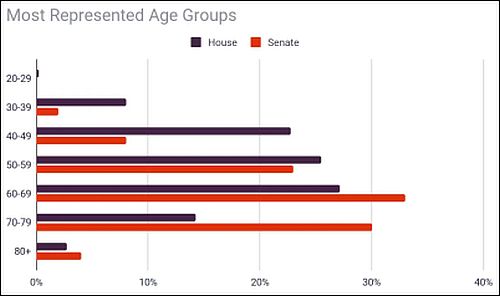
Old hands: The age of U.S. senators and U.S. representatives in the 118th Congress skews toward the elderly. (Source: FiscalNote)
United States Rep. Nicole Malliotakis (R-NY 11), who is 43, advocates for term limits as a solution to keeping Congress on the younger side. She recently noted a “major issue” with “people who have been in government for too long,” suggesting a better idea is to “be here for a certain amount of time and then move on.”
But a big roadblock to term limits, at least on the national level, is that they also require a Constitutional amendment. In 1995, when 23 States imposed term limits on members of Congress representing their state, the U.S. Supreme Court ruled them unconstitutional.
Governor Kathy Hochul introduced a plan in 2022 to impose limits of two consecutive terms on statewide elected officials, just as 16 other States have done. That plan has not proceeded.
Meanwhile, some advocate for increasing the number of terms in office. The Town of Southampton is considering increasing the term limit for town supervisor from a maximum of eight years to 12. A separate effort aims to increase the forced-retirement age of state judges from 70 to 76.
There’s no telling whether current officeholders would vote for either age or term limits – a move that could force many of them out of office.
Until limits are imposed, it seems voters have a choice between “old” or “older” representatives. And while many younger Americans want new leadership, there’s no telling when the torch will finally be passed to the next generation.
Michael H. Sahn, Esq., is the managing member of Uniondale law firm Sahn Ward Braff Koblenz PLLC, where he concentrates on zoning and land-use planning, real estate law and transactions, and corporate, municipal and environmental law. He also represents the firm’s clients in civil litigation and appeals.