By TOM MARINER //
Nassau and Suffolk counties lost more than 110,000 residents between 2017 and 2022, thanks largely to the regional “brain drain.”
 Our leaders are looking for solutions – housing is cited often – but Long Island has another job-creation, anti-drain card up its sleeve: educational excellence.
You know the big players, like Stony Brook University, Hofstra University and Adelphi University, but the regional focus on quality education runs much deeper than that. Case in point: Suffolk County Community College, where workforce training gives regional employers a clear advantage and minimizing student debt is always a consideration.
What is now the largest community college in the State University of New York system came to be in 1959, when the Suffolk County Board of Supervisors approved the establishment of the county’s first community college in Selden, on the 130-acre site of the former Suffolk County Tuberculosis Sanatorium.

Tom Mariner: Back to school.
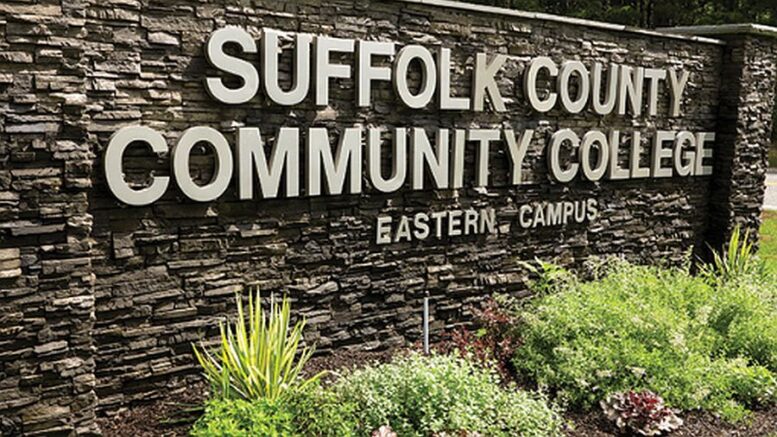
The college now has three campuses, including the original campus (rechristened in honor of first SCCC President Albert Ammerman), the Michael J. Grant Campus in Brentwood (which opened in 1974) and the Eastern Campus in Riverhead, which opened in 1977.
As with all SUNY community colleges, SCCC offers two types of degrees: a two-year associate’s degree (in either arts or sciences) that can be transferred to a four-year baccalaureate college, and an Associate of Applied Science degree that springboards professional careers.
The first type helps address the student debt crisis – for the record, SCCC has the lowest tuition of any Long Island college).
The Associate of Applied Science degree is augmented by occupational and certificate classes centered on practical skills – electronic manufacturing, air conditioning maintenance, automobile repair, welding, computer numerical control machining and more.
And both degree types give learners a running start toward continuing their education or landing a job, according to Suffolk County Community College President Edward Bonahue.
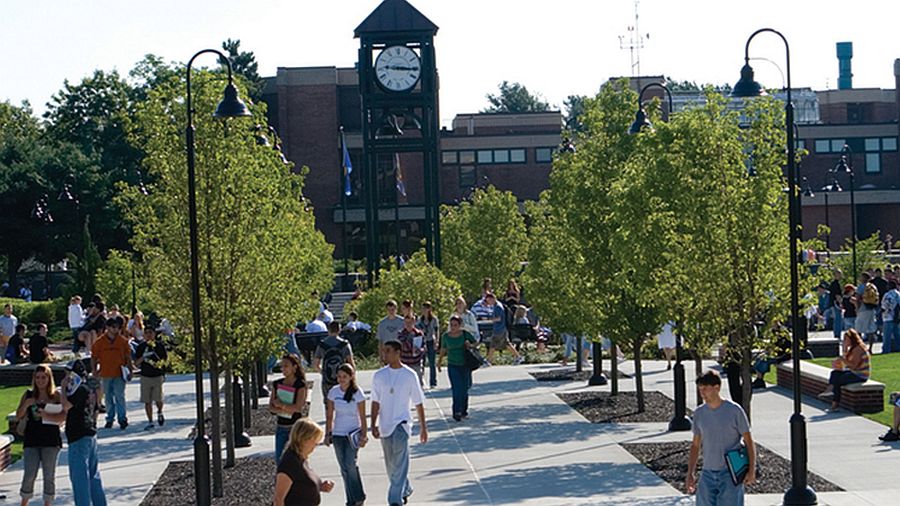
Growth mode: SCCC has come a long way since the days of the Suffolk County Tuberculosis Sanitarium.
“Suffolk County Community College starts more students on their bachelor’s degrees than any other college in New York,” the president says.
The school’s largest program – its comprehensive School of Nursing – readies students for the NCLEX-RN examination, required for a career in nursing with or without a bachelor’s degree.
The college also offers classes for high school students – on-campus and off – to give them hands-on experience with potential jobs in the region. This has been an important factor in the growth of Long Island Manufacturing Day, part of a national program that shows students, parents and educators the current reality and promising future of modern manufacturing careers.
All of this is designed to help younger generations remain on Long Island and contribute to regional socioeconomics. The college even offers a Stay on Long Island Initiative, which involves partnerships with a select group of four-year Long Island educational institutions – including scholarships, in some cases covering the full tuition of completing higher degrees.
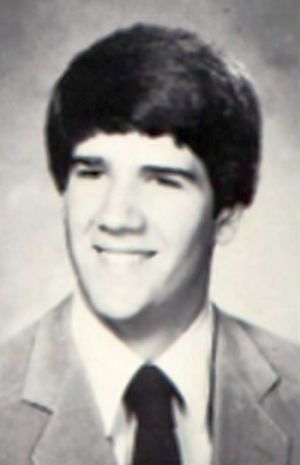
Big man on campus: Bonahue, in his Ward Melville H.S. days.
Bonahue himself epitomizes the “Long Island” spirit – he’s a graduate of Ward Melville High School in East Setauket. His administration prides itself on continuously communicating with the Island community about important education and training actions; a recent meeting in the administration building on the rolling hills of the Ammerman Campus focused on expanding SCCC’s technical training facilities to better serve regional life-sciences interests, Long Island’s largest manufacturing sector.
Meanwhile, SCCC’s English as a Second Language initiative is driven by the fact that 20.6 percent of Suffolk County residents are Hispanic.
When asked how the progressive community college is viewed alongside the region’s larger universities, Bonahue is modest but coy: “College is college,” he says.
But Islip Town Supervisor Angie Carpenter, an SCCC graduate, puts a finer spin on the notion of beginning a collegiate career at SUNY’s largest community college.
“If you [graduate from] Harvard,” Carpenter notes, “no one is going to say to you, ‘Where did you go the first two years?’”
Tom Mariner is the executive director of Bayport-based Long Island Bio.