By JEFFREY L. REYNOLDS //
If there’s any truth to Mark Twain’s observation that “the only person who likes change is a baby with a wet diaper,” infants in Tennessee and Delaware are bound to be thrilled.
 That’s because, later this summer, the two states will become the first in the nation to offer low-income families access to free diapers via their Medicaid programs.
Parents and guardians using TennCare, Tennessee’s Medicaid program, will be able to collect as many as 100 diapers a month for kids under age 2 from participating pharmacies. In Delaware, Medicaid-eligible parents will get up to 80 diapers and one pack of baby wipes per week during the first 12 postpartum weeks as part of a five-year pilot program.
As new parents know, infants can go through 10 to 12 diapers a day at a cost of about $100 per month. Like everything else, the price of baby-care products has skyrocketed post-COVID, further straining the budgets of low-income families.
The National Diaper Bank Network – which lists Huggies as a founding sponsor on its website – estimates that half of all U.S. families cannot afford enough diapers to keep their infant or toddler clean, dry and healthy. To make ends meet, they often delay diaper changes or reuse soiled diapers, putting their children at risk for rashes, skin infections, urinary tract infections and other preventable conditions.

Jeffrey Reynolds: Diaper dandy.
The May 17 approval letter from the National Centers for Medicare & Medicaid Services to Tennessee officials noted averted healthcare costs and the program’s potential health benefits to babies, but also cited studies affirming a parental mental-health boost associated with access to a sufficient diaper supply – including a reduction in maternal postpartum anxiety, stress and depression.
A 2023 NDBN survey found that one in four parents and caregivers who struggled with diaper expenses reported having to miss work or school because they couldn’t afford the quantity of diapers required by many childcare centers. On average, they reported missing 5.1 workdays over the prior 30 days, which would translate to a loss of $652 per month for a Long Island parent earning the local minimum wage of $16 per hour.
That loss, of course, makes it even harder to buy diapers, sending those families deeper into a doom loop.
Federal rules prevent needy families from using food stamps to buy diapers, and while they could use Temporary Assistance for Needy Families funds, those limited dollars must also cover rent, utilities, clothing, transportation and other basic needs.
A bill sponsored by New York State Sen. Roxanne Persaud (D-Brooklyn) that would provide eligible parents of children aged 2 years and younger with an allowance of up to $80 every three months to purchase diapers has stalled in the State Legislature since 2016.
 In the meantime, nonprofits like the Melville-based Allied Foundation are helping local families solve the diaper dilemma. According to Executive Director Heather Edwards, the foundation has distributed more than 3.2 million diapers since 2019 – all either donated or purchased in bulk, at deep discounts, using fundraised dollars. The diaper supplies are stored in warehouse space donated by Flexible Systems in Hauppauge.
The foundation’s distribution network of 65 nonprofit, community-based partners includes Island-wide organizations like the Family and Children’s Association, Long Island Cares and The INN, along with groups as far east as the Montauk Food Pantry and as far west as The Nicholas Center in Port Washington.
In case you’re wondering why people don’t just go back to using cloth diapers, Edwards says it’s because many families don’t have washing machines in their homes or apartments, and nobody is going to let you launder dirty cloth diapers in a public laundromat. That means having to hand-wash them, a task that becomes impractical for single parents with multiple jobs and multiple babies.
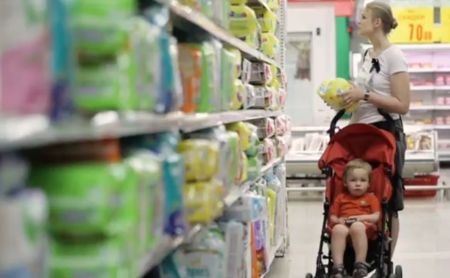
Cleanup, aisle one: New laws are helping less-fortunate families keep babies clean and healthy.
Allied’s diaper bank doesn’t currently distribute cloth diapers, but Edwards says they’ve come up with a different sustainable solution.
“We formed an initiative to help toddlers transition out of diapers,” she says. “We’re distributing potty kits containing a universal potty seat, a potty book to foster literacy and underwear to get the toddler excited for this new phase.
“The good news is that toddlers will not use diapers forever.”
Jeffrey Reynolds is the president and CEO of the Garden City-based Family and Children’s Association.