By JEFFREY L. REYNOLDS //
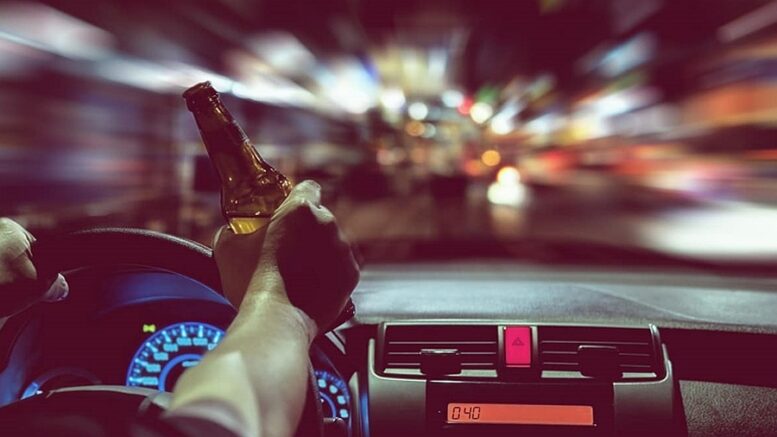
Recently released surveillance video from June 28 shows an allegedly intoxicated driver purchasing booze from a liquor store just minutes before he crashed his Chevrolet Traverse through the front of a crowded Deer Park nail salon.
 Ten people were injured, and four others – including an off-duty New York City police officer – died that afternoon, adding to a statewide traffic death toll that’s risen steadily since the start of the COVID-19 pandemic.
In a report released within days of the crash, New York State Comptroller Thomas DiNapoli detailed a statewide surge in traffic fatalities between 2019 and 2022, with Long Island’s 245 deadly crashes in 2022 topping every other region.
Since COVID, the Empire State has seen a 45 percent increase in the number of fatalities involving drivers with a Blood Alcohol Content level above the legal limit. The numbers are troubling, especially since impaired-driving deaths are entirely preventable. As policymakers try to put a dent in alcohol-related crashes, relying on human nature and handcuffs hasn’t worked well.
Public health efforts certainly haven’t convinced people to drink less; the percentage of Americans who drink alcohol hasn’t changed in 40 years. As Voices Healthcare Anchor Terry Lynam noted in his most recent column, federal health experts can’t even agree on new beer-, wine- and liquor-consumption recommendations due out next year.

Jeffrey Reynolds: Sobering thoughts.
Folks who imbibe could always hand over their keys, designate a driver or call an Uber. But drunk drivers make dumb decisions and often misjudge their level of impairment, claiming they feel fine to drive.
Meanwhile, both felony and misdemeanor DWI arrests on Long Island have dropped over the last decade – and, according to Mothers Against Drunk Driving, offenders drive drunk at least 80 times before they’re finally arrested.
Some of those locked up locally get to meet Suffolk County Assistant District Attorney Maureen McCormick, who also served in Nassau for almost 20 years, prosecuting vehicular crimes and comforting victims’ families. McCormick says law enforcement could use some help – and, like lawmakers in Washington, she sees technology as a promising strategy for putting the brakes on impaired driving.
The no-nonsense ADA believes airbags, lane-detection sensors, blind-spot monitoring and other safety features have already saved countless lives. “Technology exists,” she notes, “and is being refined to prevent drunk and drugged driving.”
That’s good, because the federal Infrastructure Investment and Jobs Act signed by President Joe Biden in late 2021 directs the U.S. Department of Transportation – via the HALT Drunk Driving Act – to complete a rulemaking process and issue a final safety standard by Nov. 15 of this year. The new standard will require that all new cars come equipped with impaired-driving prevention technology.
If all goes according to plan, safer cars will start rolling off the assembly line by 2027. Those cars will have already-familiar safety features that monitor driver activity, behavior and responses – like lane drifting or sudden maneuvers – along with emergent technologies that can monitor a driver’s physical characteristics with eye tracking and seat or wheel biometrics that can monitor heart or brain activity.
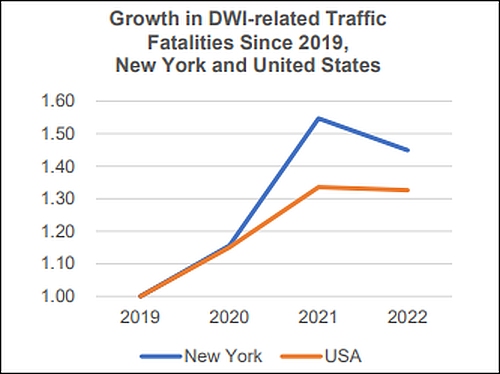
New York state of disgrace: Impaired-driving-related fatalities have spiked nationally since the pandemic — and soared in New York State. (Source: National Highway Traffic Safety Administration)
The final U.S. DOT standard could also require breathalyzer-like mechanisms that measure the driver’s blood alcohol level before a car can start, or touch-based systems that can measure alcohol through the skin of a driver’s hand on the steering wheel.
Paige Carbone, MADD regional executive director, calls anti-drunk driving technology “a game-changer in the battle to prevent roadway deaths and injuries,” and looks forward to “a future when every car is equipped with technology that can stop drunk and impaired drivers.”
Anticipating regulatory changes and consumer demand for safer cars, Swedish automaker Volvo got a running start in 2019, when it became the first automaker to advertise eye-gaze camera technology that detects impairment, warns the driver and, if necessary, brings the vehicle to a gradual halt. It can even call for help.
If stopping a car or disabling the ignition sounds inconvenient or intrusive, McCormick notes that had those safety features been available, “then the driver who was allegedly drunk and drove into a nail salon would have been stopped by his own car.”
Jeffrey Reynolds is the president and CEO of the Garden City-based Family and Children’s Association.