By GREGORY ZELLER //
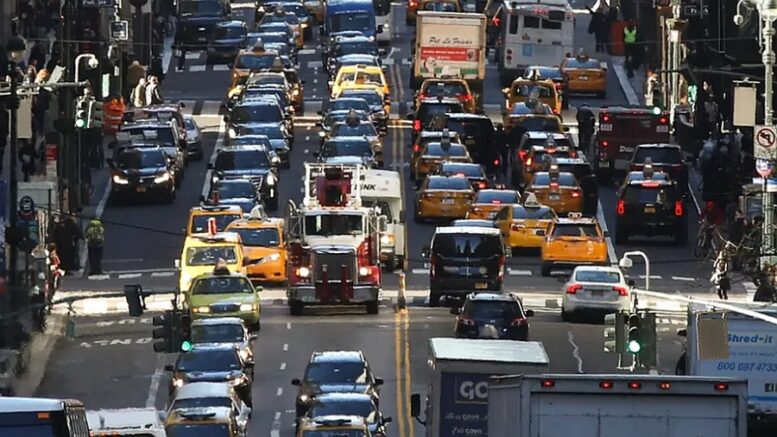
Plans to impose “congestion pricing” on New York City motorists have generated raucous applause – and fierce resistance.
 Battle lines are being drawn along 60th Street in Lower Manhattan, with proponents cheering an ambitious plan to limit vehicular traffic, reduce pollution and improve Big Apple mass-transit options, and opponents – including a Long Island-based state senator – decrying unfair penalties for suburban commuters.
Governor Kathy Hochul announced Nov. 14 that she was lifting an “indefinite pause” on the implementation of the congestion-pricing plan. Facing a maelstrom of political backlash – with a critical election season looming – the governor hit the pause button in June, days before the new tolls were set to kick in.
The Central Business District Tolling Program, originally voted into law by state lawmakers in 2019, was a first for a U.S. city. The revived plan is now set to take effect in January.
According to the governor’s office, tolling equipment – including E-ZPass scanners and license-plate readers – will be placed on Broadway between 60th and 61st streets, and passenger vehicles entering the city’s new Congestion Relief Zone will be charged $9 per day during peak hours (5 a.m. to 9 p.m. weekdays, 9 a.m. to 9 p.m. weekends) and $2.25 per day when entering during non-peak hours.
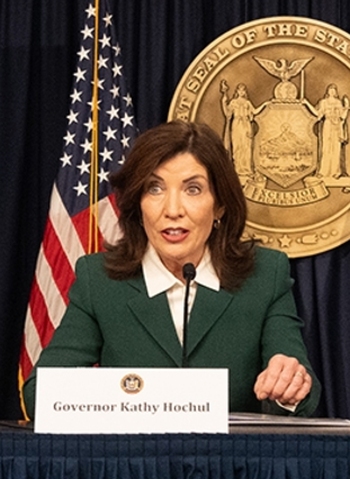
Kathy Hochul: Congestion symptoms.
The motorcycle price range will shift between $4.50 peak and $1.05 off-peak. The top $9 passenger-vehicle rate is lower than the original plan’s $14 peak toll – Hochul trumpeted “a 40 percent reduction in congestion-pricing tolls” – but is scheduled to rise $12 in 2028 and $15 in 2031.
The toll does not apply to vehicles traveling along the FDR Drive or the West Side Highway, or through downtown’s Hugh L. Carey Tunnel, though vehicles exiting those excluded roadways in the CRZ will be subject to congestion-pricing tolls.
The Metropolitan Transportation Authority Board of Directors voted Monday night to approve the revamped plan, to the delight of environmentalists and other congestion-pricing advocates. Bill Ulfelder, executive director of The Nature Conservancy in New York, called the strategy a “major win for all New Yorkers.”
“[This sets] a national example on how to reduce pollution, invest in mass transit and improve human health,” Ulfelder said in a statement. “Congestion pricing improves air quality for all and invests in vital infrastructure that all New Yorkers depend on.”
 Similar support was voiced across NYC government. New York City Council Speaker Adrienne Adams said that “investments in the immediate and long-term health of our transportation infrastructure are critical to the wellbeing of our city and its communities,” while New York City Councilmember Gale Brewer – noting that “federal, state and local government has underfunded transit for far too long” – highlighted “the deeply desperate need of the MTA to finance massive improvements to our century-old transit infrastructure.”
Endorsements also poured in from suburban corners – particularly those most likely to send motorists to Manhattan Island via midtown and uptown crossings.
White Plains Mayor Tom Roach cited “poor air quality (and) unsafe conditions for pedestrians” caused by current lower-Manhattan traffic, and said Hochul’s decision to advance congestion pricing “will have a substantial positive impact” on local quality of life and mass transit, “the most efficient means of moving people.”
Ulster County Executive Jen Metzger said she was “very glad to see this policy move forward,” adding congestion pricing will “meaningfully reduce climate-damaging emissions,” while New Rochelle Mayor Yadira Ramos-Herbert applauded “a win for sustainability, economic growth and our collective future.”
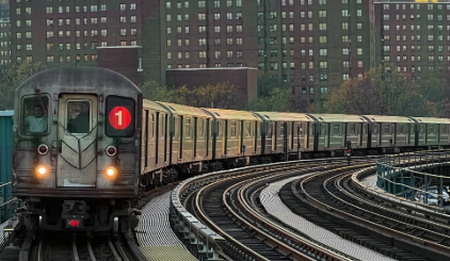
It tracks: According to proponents, congestion pricing will reduce vehicular traffic, improve the environment and help modernize New York City’s aging mass-transit infrastructure.
However, congestion pricing has just as many critics.
A federal-court lawsuit challenging NYC congestion pricing, filed in April by the State of New Jersey, is still pending. And President-elect Donald Trump has vowed to “terminate the plan” once he takes office in January, a promise that’s generated healthy procedural debate – though legal experts agree there are several regulatory and legal paths the freshly re-minted president might try.
The most pointed opposition, however, may have been voiced by State Sen. Monica Martinez (D-Hauppauge), a former member of the Suffolk County Legislature who called the congestion-pricing plan “an affront to the hardworking families of Long Island.”
Imposing a hefty toll exclusively on motorists entering Manhattan south of 60th Street places on unfair burden on Island-based commuters, according to Martinez, who lambasted “a direct attack on the suburban residents who help this city run.”
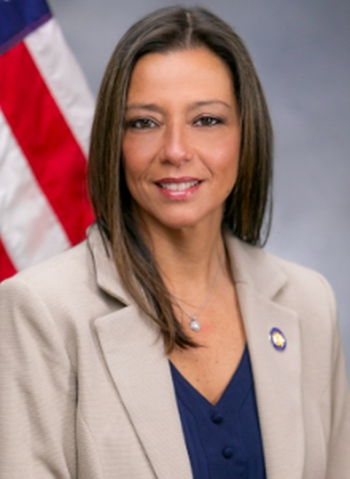
Monica Martinez: Challenging the “money grab.”
“This ill-conceived measure is nothing more than a money grab at the expense of middle- and lower-income commuters who already shoulder some of the highest costs of living in the nation,” the state senator noted. “I will not stand idly while Long Islanders are unfairly taxed simply for going to work, visiting loved ones or accessing essential services in New York City.”
According to Martinez’s office, the lawmaker is polling colleagues from other suburban districts whose constituents will be disproportionately affected and “exploring every possible option to block the implementation of congestion pricing.”
Arguments against the toll plan – which were strong enough to stay the governor’s hand this summer – “remain as valid as ever,” the state senator noted Monday.
“The economic challenges that led to its delay in June persist today,” she said. “This is simply a reversal made without consideration for the livelihoods of New Yorkers outside Manhattan.
“I … call on our state leaders to focus on real solutions that alleviate congestion and protect our environment without punishing suburban communities,” Martinez added. “Long Island commuters deserve better.”