By MICHAEL H. SAHN //
The New York City Council has approved historic amendments to the city’s Zoning Resolution – a game-changer for the Big Apple and a potential blueprint for Long Island prosperity.
 The council passed the amendments – collectively dubbed the City of Yes for Housing Opportunity text amendment – Dec. 5, with the big idea of producing more housing of every type and form throughout the city.
Long Island governments should seriously consider the best COY concepts and see how they might work in their particular communities. The right combination of changes could create an “Island of Yes,” turning LI from a NIMBY region to a YIMBY region (“yes in my backyard”).
More housing of all types is exactly what Long Island needs, according to the Long Island Regional Planning Council. Among all state regions, the Island has the highest percentage of rental households that are “cost burdened” (51.4 percent) – due in large part to a scarcity of rental units compared to other regions, where 30 percent or higher of the entire housing stock is rental properties. On Long Island, it’s a paltry 18.7 percent.
The consequences of this lack of rental housing, especially affordable housing, are well documented. Working-age people are leaving Long Island for areas with greater diversity in housing stock, resulting in an aging population, workforce shortages and declining enrollment at regional high schools and colleges.

Michael Sahn: Yes man.
The lack of affordable senior housing, meanwhile, challenges an elderly population that largely wants to age in place, with waitlists as long as five years to enter some senior residential facilities.
And the homeless population in both Nassau and Suffolk counties is on the rise again, after a short-lived post-pandemic drop. Stephen Brazeau, director of Pax Christi Hospitality Center, a Port Jefferson-based homeless shelter, told the Long Island Press that a lack of affordable housing as a major contributor.
Housing drives transformative economic growth, generates taxes and increases property values, as exemplified by Patchogue’s Downtown Redevelopment, cited as a Project of Regional Significance by the LIRPC. Rental housing also serves as a steppingstone to single-family ownership for younger families and individuals entering the workforce.
New York City’s Zoning Resolution is the complete opposite of Long Island zoning laws. The city’s plan describes what uses are permitted, as well as bulk and area restrictions – and with those guardrails in place, most building in the city is developed “as-of-right,” without discretionary approvals.
On Long Island, virtually all projects of significance require a series of discretionary permits and approvals from multiple jurisdictions.
As such, translating COY’s regulations to multiple Long Island communities would require creativity and innovation. But key COY concepts can still be implemented here, including modified regulations for medium- and low-density zoning districts.
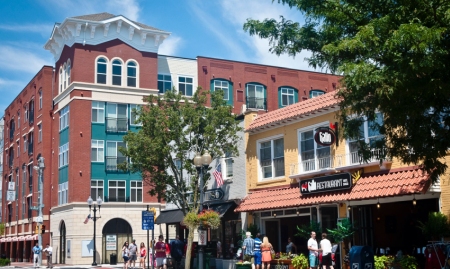
Positive redevelopments: Downtown Patchogue’s ongoing redevelopment plan is “regionally significant,” according to the Long Island Regional Planning Council.
For the city’s low-density districts – which are similar to Long Island communities with downtown neighborhoods, or communities centered around transit corridors like the Long Island Rail Road – COY encourages Transit Oriented Development in residential, commercial and recreational spaces. The modified city plan also increases the maximum permitted residential Floor Area Ratio for sites that are closest to transit facilities, which COY calls the “Greater Transit Zone.”
City of Yes also relaxes (or eliminates) mandatory parking requirements for sites within a Greater Transit Zone – helping to lower building costs and free up space for more housing units – and in certain districts encourages the conversion of existing non-residential buildings for residential and mixed uses.
Long Island communities have many commercial buildings and strip-type shopping centers on main street corridors and around transportation hubs that are perfect for Transit Oriented Development, mixed residential/commercial uses or residential uses. Re-using existing buildings maintains a community’s visible character and relaxing Floor Area Ratio and parking requirements makes sense for transit-based development near railroad stations and other transit hubs.
Some Long Island communities have already received recognition for addressing housing needs. The Village of Mineola was honored in 2024 as one of the state’s first 20 Pro-Housing Communities, the only Island municipality so recognized in the first Pro-Housing certification round.
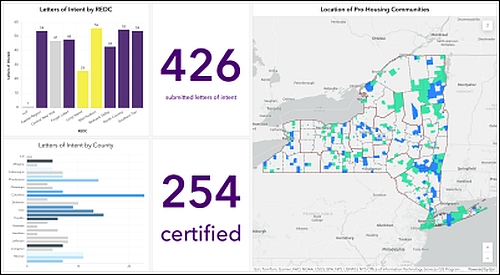
Going Pro: Communities across Long Island and the rest of New York State are now aiming for Pro-Housing Community certification. (Source: New York State Division of Housing and Community Renewal)
Since Mineola’s certification, dozens of additional municipalities in Nassau and Suffolk have submitted letters of intent to become Pro-Housing Communities.
There are many differences in zoning laws between New York City and Long Island. But local leaders can implement the spirit of COY in the local zoning context to suit their needs.
A series of similar zoning amendments, tailored to the specific requirements of different communities, would create an overall “Island of Yes” – a positive for the Island’s collective future.
Michael H. Sahn, Esq., is the managing member of Uniondale law firm Sahn Ward Braff Coschignano PLLC, where he concentrates on zoning and land-use planning, real estate law and transactions, and corporate, municipal and environmental law. He also represents the firm’s clients in civil litigation and appeals.