By GREGORY ZELLER //
The intense politicalization of hard science is eroding the nation’s physical and mental health.
 That’s the word from the latest Mount Sinai South Nassau Truth in Medicine Poll, which details public opinion on healthcare affordability, trust in government agencies to handle the next COVID-level health crisis and other key healthcare-related issues.
The poll, sponsored by Bethpage-based FourLeaf Federal Credit Union and released this week, queried 600 New York City and Long Island residents by phone between July 13 and July 20. With a margin of error of plus or minus 3.9 percent – equating to a 95 percent confidence in the published results – it shows that current federal policies are quickly destroying public confidence in the national healthcare infrastructure.
Case in point: Only 38 percent of respondents said they trust current government recommendations on preventing chronic diseases, with large majorities citing the emergence or re-emergence of infectious disease like measles (77 percent) and new COVID-19 variants (65 percent) as serious concerns.
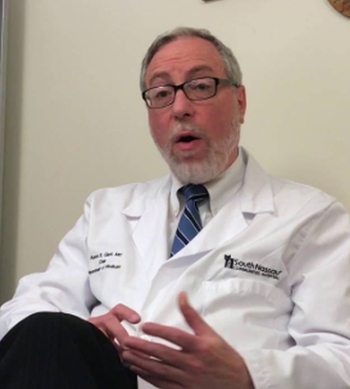
Aaron Glatt: Long division.
Only 40 percent of respondents said they believe the country is prepared to handle the next COVID-level health crisis, while more than two-thirds (67 percent) said they are concerned about the cost of maintaining healthcare for themselves and their family.
The results of the latest Truth in Medicine Poll – the 24th since the long-running public-perception series began in 2017 and second of 2025, following a poll released in April centered on alcohol consumption – are actually predictable, according to Mount Sinai South Nassau Chief of Infectious Diseases Aaron Glatt, considering how “science has become politicized.”
“It’s not surprising that confidence in whether we are prepared for the next public health crisis has eroded,” noted Glatt, who also chairs the Oceanside-based hospital’s Department of Medicine. “The divisions we see across the country have an impact.”
Central to those divisions is U.S. Secretary of Health and Human Services Robert F. Kennedy Jr., who has pushed his personal anti-science crusade – specifically, an anti-vaccine crusade – to the national forefront.
According to the World Health Organization, vaccines can prevent contraction of more than 30 life-threatening diseases and infections, including measles and influenza, and prevent up to 5 million deaths annually. This directly contradicts the unscientific musings of Kennedy, who has been quoted as saying, “There’s no vaccine that is safe and effective” (a quote he later denied, despite recordings to the contrary).
 With Florida pushing to become the first U.S. state to ban vaccination mandates for schoolchildren – a policy so extreme it even ruffled President Donald Trump, who appointed Kennedy – a key federal vaccine panel gutted and restaffed by the HHS secretary was expected this week to nix the hepatitis B vaccine currently mandated nationally for newborns.
Kennedy has also stated multiple times his belief that vaccines cause autism, a theory that has been roundly debunked by the scientific establishment.
The good news, according to Glatt, is that even as federal policymaking lunges backward, “healthcare providers and researchers remain committed to evidence-based study and reporting.”
“Immunization is key to primary healthcare and paramount to the prevention and control of infectious disease outbreaks,” Glatt added. “Vaccines have proven that they are worth the investment to make them and the health insurance costs to cover them, as they are the safest, most effective way to protect the public from many preventable life-threatening diseases.
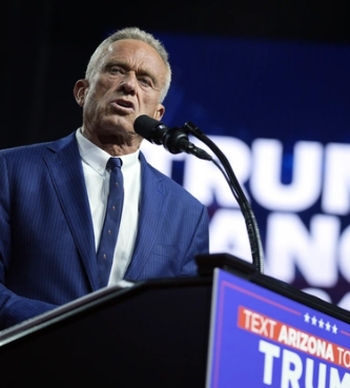
Robert F. Kennedy Jr.: Shorting science.
“I strongly encourage everyone to follow up with their physicians to get the recommended vaccines at the recommended times.”
This ties directly into poll respondents’ concerns about the cost of healthcare. While 80 percent of respondents said they were satisfied with their health-insurance coverage and 76 percent said they were comfortable with the cost of their prescription drugs, 8 percent said they had no health insurance at all – with half of that minority saying insurance is too expensive and a quarter noting their employers don’t provide insurance plans.
Nearly two-thirds of all respondents (65 percent) agreed that government should play a role in ensuring affordable health-insurance access for all.
That makes sense to Mount Sinai South Nassau President Adhi Sharma, who considers health-insurance access a critical part of healthcare, since “no one is immune to injuries or illnesses.”
“Health insurance provides security and peace of mind in the event of a serious illness,” Sharma added. “It also plays an important role in preventive care.”