By MICHAEL H. SAHN //
America celebrates its semiquincentennial anniversary on July 4, the 250th anniversary of the signing of the Declaration of Independence – but let’s also recognize the 238th anniversary of New York State, and the pivotal roles New York’s law and government leaders have played in establishing and maintaining our national democracy.
 Their historical voices and acts resonate today, just as they have since New York adopted its first constitution in April 1777 and since New York ratified the U.S. Constitution in 1788.
The State Constitution was a remarkable statement of legal and governing principles, reciting the tyranny imposed by England (as stated in the Declaration of Independence), affirming that New York joined with the other Colonies to declare independence and setting forth the detailed framework for New York’s state government.
Prominent Long Islanders of the time participated in New York’s U.S. Constitutional convention, including delegates from Suffolk and Queens counties (which then encompassed Nassau County). Among them: Thomas Tredwell, who later served as a member of the U.S. House of Representatives; Cornelius Van Wyck, best known today as the namesake of the Van Wyck Expressway; and Samuel Townsend, who served as Oyster Bay justice of the peace and as a member of the New York Provincial Congress.
After the convention, William Floyd of Suffolk – who also signed the Declaration of Independence – was appointed New York’s senator.
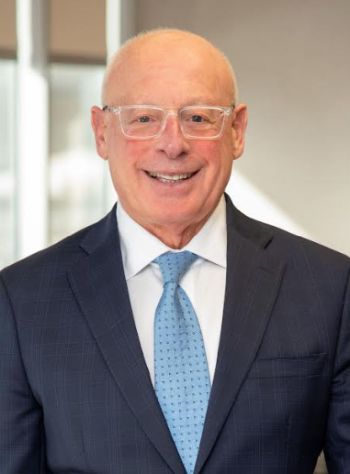
Michael Sahn: History in the making.
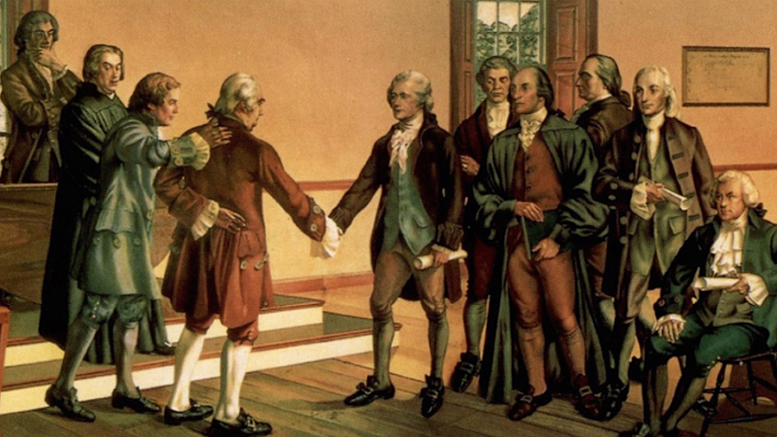
On July 26, 1788, at a convention held in Poughkeepsie to consider ratifying the U.S. Constitution, New York officially became the 11th State to join the Union. The vote was close, with a margin of 30 to 27 in favor.
Many delegates came to the convention as Anti-Federalists, opposed to ratification. They believed that the U.S. Constitution concentrated too much power in the federal government, negating state sovereignty.
The Anti-Federalists included all five Suffolk County delegates, who remained steadfastly opposed throughout the long and contentious debates. The most prominent of them was Tredwell, a Smithtown native who fought hard against ratification.
The Queens delegates started as Anti-Federalists but eventually voted to ratify. These delegates included several representatives from what are now Long Island’s North Shore communities.
Ultimately, the persuasive arguments of Alexander Hamilton and John Jay – later the first chief justice of the U.S. Supreme Court – carried the day. But the New York delegates were not satisfied to simply ratify. Their lengthy ratification message advocated for guarantees of various rights and recommendations for constitutional amendments.
It affirmed rights to freedom of the press, trial by jury, indictment by “grand jury,” protection against unreasonable search and seizure, due process protections and the abolishment of cruel and unusual punishments.
It denounced standing armies in peacetime as dangerous, required civilian control of the military and demanded due process before deprivation of life, liberty or property. It also urged that no President was eligible to serve a third term.
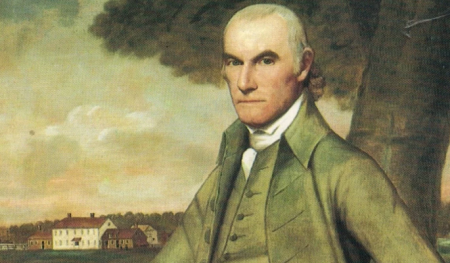
Take the Floyd: Suffolk County resident William Floyd, who signed the Declaration of Independence and was New York’s first U.S. senator, is one of many New Yorkers who’ve influenced the national course.
These principles influenced James Madison, who in 1789 drafted the Bill of Rights, the first 10 amendments to the U.S. Constitution, and have become part of our “inalienable rights” – the fabric of our legal system and democracy, which we depend on every day.
Jurists from New York have also helped shape our nation. Thirteen SCOUTS justices have come from New York – a who’s-who of American jurisprudence including Jay (appointed by George Washington as the first Chief Justice), Charles Evans Hughes (a New York governor who also served as Chief Justice), Robert Jackson (a one-time New York attorney general who later served as lead prosecutor at the Nuremberg war crimes trials) and Benjamin Cardozo, whose judicial career (chief judge of the New York Court of Appeals, in addition to his SCOTUS term) earned him recognition as one of the greatest of all American jurists.
Current Associate Justices Sonia Sotomayor, the first Latina woman to serve on the U.S. Supreme Court, and Elana Kagan, an important swing vote on today’s bench, also hail from New York.
This pantheon of justices is often cited for landmark decisions and thoughtful writings that are as meaningful today as ever. The state and the nation wouldn’t be the same without them.
As Justice Cardozo wrote about the relationship between history and law, “History, in illuminating the past, illuminates the present, and in illuminating the present, illuminates the future.”
Michael H. Sahn, Esq., is the managing member of Uniondale law firm Sahn Ward Braff Coschignano PLLC, where he concentrates on zoning and land-use planning, real estate law and transactions, and corporate, municipal and environmental law. He also represents the firm’s clients in civil litigation and appeals.