

By MICHAEL H. SAHN //
As we mark Earth Day No. 52 on April 22, have the challenges to our environment ever been greater?
 The UN has warned that time is running out to avoid climate change’s most dire consequences. And according to United Nations Secretary General Antonio Guterres, the Ukraine war’s disruptive impacts on global food and energy markets may put some climate-change targets out of reach.
Rising gas prices have increased focus on electric cars and trucks that don’t produce greenhouse gas emissions. Interest in electric-powered and hybrid vehicles, and other alternatives to traditional fossil-fuel engines, was rising fast even before the current “gas crisis,” and as gas prices rise, electric-car sales are surging.
Meanwhile, Amazon wants a fleet of electric-powered vans to meet its pledge that half of its deliveries will be carbon-neutral by 2030. Other delivery-centered companies, like FedEx and United Parcel Service, have stated similar goals.

Michael Sahn: Infrastructural defect.
Electric-powered vehicles on Long Island roadways should start multiplying, now that Gov. Kathy Hochul has signed a law effectively banning statewide sales of cars, light trucks and off-road vehicles with standard internal-combustion engines by 2035.
The law also requires heavy- and medium-duty trucks sold in New York to achieve zero emissions by 2045 – meaning all new vehicles sold by then must be battery-electric, plug-in hybrids or powered by hydrogen fuel cells.
The New York law mirrors California’s zero-emission regulations, a lead many other states are following. Administrative rulings by the U.S. Department of Transportation and the U.S. Environmental Protection Agency have reversed Trump-era rules pre-empting states from following California’s guidelines on vehicle emissions.
Corporate leaders are also getting on board. General Motors decided in January to reverse course and agreed to comply with California’s emission standards, which are now New York’s as well.
According to Environmental Advocates of New York Director of Climate Policy Conor Bambrick, this is all a very huge deal, since “transportation represents the largest sector of greenhouse-gas emissions in New York State.”
Progress has been clear, but it will not be easy to turn all these initiatives into realities.
The infrastructure needed to service an all-electric-vehicle society doesn’t yet exist. By 2050, Albany projects that electric cars and trucks will use 14 percent of New York’s total power output; that’s equivalent to half the electricity New York City consumed in 2019.

Not as easy as it looks: New York State’s environmental goals are noble — but how we get there remains to be seen.
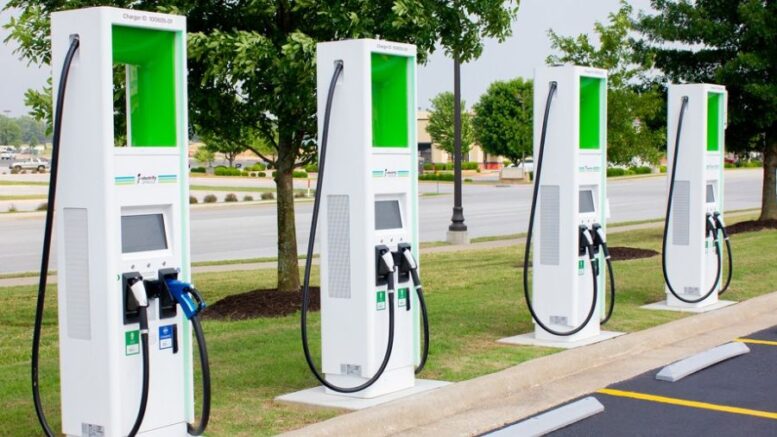
We also don’t have the charging facilities for all these electric vehicles. Most people who buy electric or hybrid vehicles now are able to charge their cars at home – but what about future electric-car owners who live in multiuse downtown Long Island buildings, or in New York City apartment buildings?
Picture all the service stations on Long Island – will electric-charging stations replace them all? How soon? Meanwhile, during the decades when gas- and diesel-powered vehicles are phased out, how will we support a dual structure of electric charging stations and gasoline stations?
We’ll need new zoning and land-use laws for that, just as we have current laws stating where we can place gasoline stations and other public services.
Given today’s stressed power system – especially on Long Island – we will have a huge power gap here, unless we take bold steps now to increase generating and transmission capacity.
Passing laws that push the state toward electric and hybrid vehicles is just a beginning. Unless we put the infrastructure in place, many more Earth Days will come and go before we can effectively invest in our planet.
Michael H. Sahn, Esq., is the managing member of Uniondale law firm Sahn Ward Braff Koblenz PLLC, where he concentrates on zoning and land-use planning, real estate law and transactions, and corporate, municipal and environmental law. He also represents the firm’s clients in civil litigation and appeals.





If California can’t keep itself from having brownouts what can we expect from the rest of the US. Sure, close all the fossil fuel and nuclear power electric generating plants. Hope the wind keeps blowing and the sun shines. Make all the houses use electricity for heating, cooking, washing etc. What do you do when the power goes out? Light a fire? Live in a cave? Carry a stick? What have we done? Raised a nation of educated idiots?