By MICHAEL H. SAHN //
Nuclear power is back – and despite its bad history with nuclear power, Long Island needs to consider it as a progressive energy source.
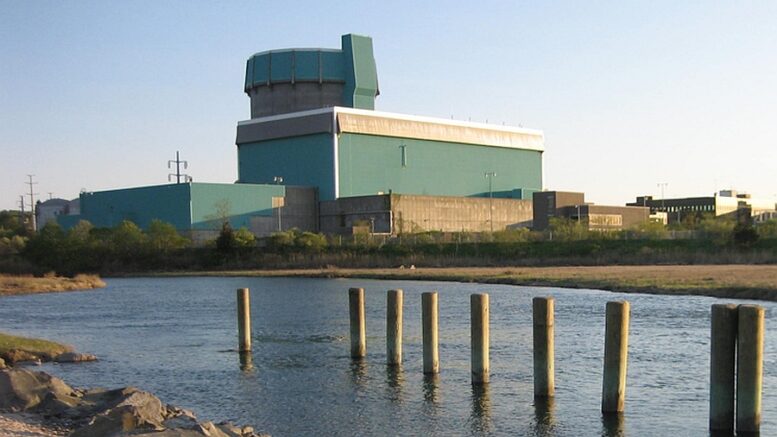
 In 1989, public opposition over safety, the environment and the inability to evacuate in case of an emergency forced the Long Island Lighting Company to close the Shoreham Nuclear Power Station – which it built to meet rising energy demands – before it even became operational.
Closing Shoreham was a key factor in LILCO’s demise. We are still paying the price for closing the plant, which totaled approximately $6 billion in construction costs that were passed on to the ratepayers without solving the needs of Long Island’s energy infrastructure.
Likewise, the Indian Point Energy Center in Westchester County was taken offline in 2021 due to its age and similar safety and environmental concerns.
But New York State still relies upon three upstate nuclear power plants – the Nine Mile Point Nuclear Station and the James A. FitzPatrick Nuclear Power Plant, both near Oswego, and the Robert Emmett Ginna Nuclear Power Plant in Wayne County – for roughly 22 percent of all its power and 44 percent of its renewable net-zero energy.

Michael Sahn: Nuclear man.
The need for more electricity – driven by economic growth and the huge energy demands of rapidly proliferating artificial intelligence and data centers – has refueled interest in nuclear power as a carbon-free energy source. Throw in questions about the viability of other renewable sources, such as wind and solar, and stakeholders at the state and federal levels are being forced to find new ways to harness the potential power of a new generation of technologically advanced nuclear power plants.
New York Independent System Operator, which manages the state’s electric grid, expects energy demand in New York to rise due to many factors, including the electrification of transportation and heating, the development of energy-intensive industries (like those AI data centers) and increased manufacturing. Some reports say New York City will face power shortages in the 2030s without innovative solutions.
The Trump Administration’s energy policy has pivoted away from renewable sources in favor of fossil fuels. This dramatic shift also refocuses federal interest on nuclear power as a zero-carbon-emission energy source.
The U.S. Department of Energy supports nuclear power and the federal government recently entered into a long-term contract with a major nuclear-energy provider to supply the equivalent of all the power it needs to power federal facilities.
Wind energy suddenly seems problematic for Long Island, given the recent cancellations of three projects off the shores of Long Island, including Beacon Wind’s withdrawal from a project that would have fed renewable energy to Long Island.
Ironically (yet timely), history is repeating itself as the infamous Three Mile Island nuclear power plants are coming back online specifically to produce power for Microsoft and its AI-based technology future.
New York has joined the movement to develop new nuclear power sources. In January, Gov. Kathy Hochul announced the development of a Master Plan for Responsible Advanced Nuclear Development, led by the New York State Energy Research and Development Authority in collaboration with other state agencies. To start, NYSERDA announced a Blueprint for Advanced Nuclear Energy Technologies.
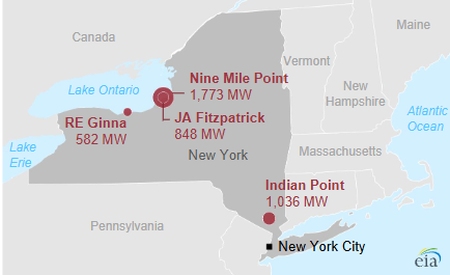
Northern exposure: With the Indian Point Energy Center in Westchester County closed, New York State now relies upon three upstate nuclear plants for a large portion of its electricity generation. (Source: Energy Information Administration)
Legislation has also been introduced in Albany to fund research into bringing other nuclear-power sources back to the electric grid, specifically to meet the state’s ambitious zero-emission climate goals.
Meanwhile, new nuclear-power generation technologies are coming online, such as Nano Nuclear Energy’s “microreactors.” Such technologies allow nuclear-generated power to be transmitted long distances to destinations like Long Island, much like power from far-off hydroelectric plants – so nuclear plants need not be on the ground here.
Nuclear plants can also be sited and built offshore. This is already being accomplished in Europe and elsewhere.
The bottom line is that Long Island needs energy and nuclear is a viable option. We can anticipate that new AI and data centers will be built on Long Island – a potential economic boom – but only if we can power them.
With proper laws and regulations, and due consideration of environmental issues and safety concerns, nuclear is a viable, safe and renewable source to power Long Island’s future – and should be part of the discussion.
Michael H. Sahn, Esq., is the managing member of Uniondale law firm Sahn Ward Braff Coschignano PLLC, where he concentrates on zoning and land-use planning, real estate law and transactions, and corporate, municipal and environmental law. He also represents the firm’s clients in civil litigation and appeals.