By DAVID A. CHAUVIN //
When I was young, my parents told me I had to wait 30 minutes after eating before I could go swimming. It had something to do with the water interfering with the way my food digested, which would cause me to get sick. Or something like that.
 Anyway, it turned out to be total nonsense. But I still have a hard time letting go of the custom. Much to my kids’ chagrin, it remains a persistent artifact of my childhood.
It’s a lighthearted dad joke of an anecdote. But it’s also a handy allegory about what happens in the absence of good PR: Misinformation drives the narrative.
I’m not only referring to slanderous fake news or national-headline-grabbing kind of misinformation, but simple misconceptions at the local level – whether intentional or not – leading to the disruption of innovation and the potential elimination of projects that could otherwise provide real quality-of-life benefits.
Conspiracy theories and disinformation are obviously not new, but advancements in social media algorithms to target specific people have made them more accessible – and more flammable. It’s obvious at the national-political level, but we’ve felt its impact here on Long Island, too: distrust of the COVID-19 vaccines, rising aggression at school board meetings and vehement opposition to real estate development, even in under-resourced communities where development could bring aesthetic, financial and social benefits.
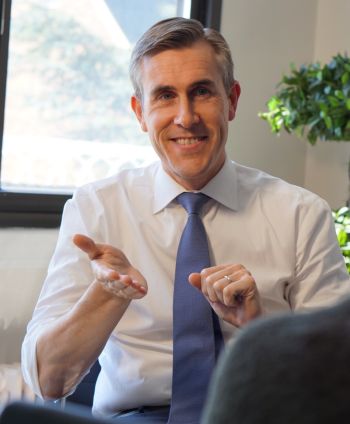
David Chauvin: Truth be told.
Thirty years ago, my parents shared an unfounded urban legend they heard from another parent who may have just wanted to relax after lunch, instead of watching their kid in the pool. This helped shape my life. Today, similar urban legends are shared with millions of people with the click of a button, and they shape perspectives exactly the same way.
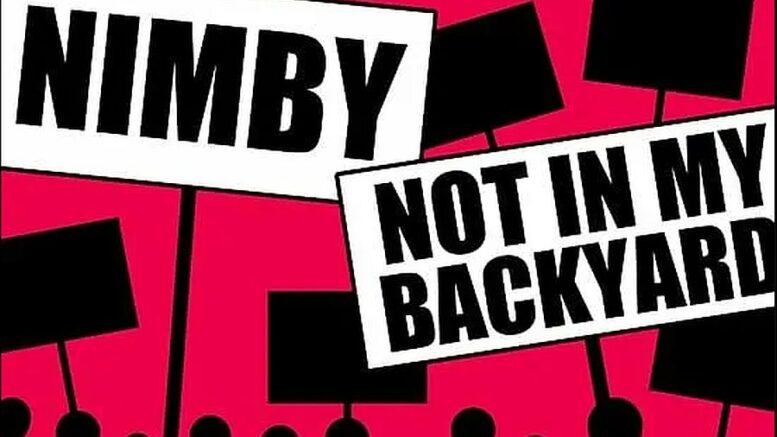
On a national scale, we’ve seen the dangers of Alex Jones’ lies and how quickly they spread. Here on Long Island, the danger is mostly explicitly seen in real estate development. Every proposed project, without fail, is met with empty arguments and misinformed statistics about overrun schools, polluted water, blocked views and increased traffic.
While these points are incredibly important to any community, there is a reality to go along with the vitriol. The reality is that developers at any level are required to conduct and publish extensive environmental-impact studies to ensure these concerns are moot, and to make development-plan accommodations that prevent them from ever becoming issues.
Developers make these statistics and their plans known and are required by law to openly dialogue with neighboring communities. But misconceptions are what drive the narrative. Ultimately, truth has very little virality.
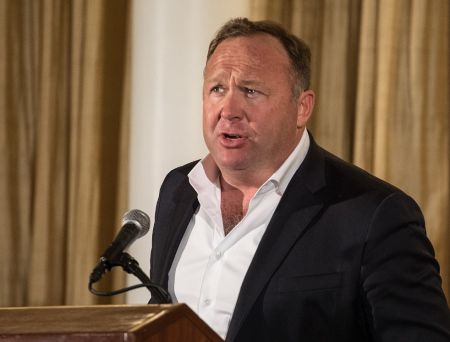
Pants on fire: One of the most dangerous liars in American history.
As with any new project or policy, it’s essential for developers and architects to work alongside communities to make sure community needs are considered. Most projects, therefore, are focused on blending into a community and providing benefits to residents.
But still, the dialogue so often becomes toxic. Inherent distrust threatens meaningful progress. And developers are forced to focus on dispelling misconceptions – even addressing points that often have nothing to do with the proposed project – instead of engaging in constructive conversations.
It seems the goal of every Long Island community has become to kill all proposed projects and stop anything new, when instead, Islanders should be taking the time to understand the specifics. If not, then Long Island becomes the place where good ideas go to die.
Communication is the path to innovation. But unfortunately, it seems that as communication-related technologies advance, the regional conversation is disintegrating.
David A. Chauvin is executive vice president of ZE Creative Communications.