By DAVID A. CHAUVIN //
Prestige television series, podcasts and documentaries about con artists are everywhere.
 On Netflix, which seems to be making these stories into a cottage industry, you have “Inventing Anna,” a huge hit about Russian con artist Anna Delvey (a.k.a. Anna Sorokin), who swindled millions from New York City One Percenters by pretending to be a German heiress. Netflix also has “The Tinder Swindler,” a huge hit about fake billionaire Simon Leviev, who uses the titular dating app to manipulate women into giving him money.
There’s Billy McFarland, the fraudster behind the ill-fated Fyre Festival, a scandal so salacious it produced not one but two hit documentaries (on Netflix and Hulu).
And, of course, there’s Elizabeth Holmes, who’s everywhere. Her story – featuring Theranos, the fraudulent blood-testing company that managed to swindle everyone, including the highest levels of federal government – truly captured the zeitgeist. There are several hit podcasts and books, a popular HBO documentary and an award-winning Hulu series, “The Dropout.”
There are many more examples, of course, but in the interest of sanity and word counts, we’ll stop there. What matters is that in pop culture, it seems con-artist stories are having a moment.
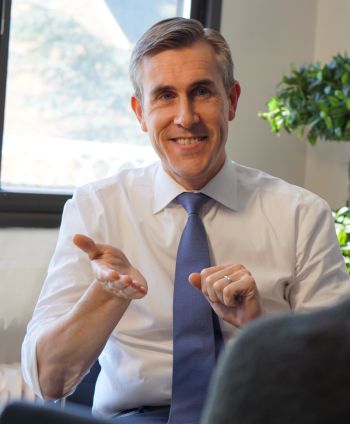
David Chauvin: The wrath of cons.
And now, sadly, this moment has bled into Long Island and national politics. I speak, of course, of U.S. Rep. George Santos (R-NY 3), the perfect politician for our con-obsessed culture.
You probably don’t need to hear Santos’ “credentials,” if you’ve glanced at the news over the last three months. Suffice it to say, if you find yourself on a transatlantic flight, you can pass the time by reviewing the list of Santos’ lies, and maybe get halfway through it.
(I’ll note here that I’m absolutely biased. Robert Zimmerman – the Democratic candidate Santos defeated in last November’s election – is my business partner, friend and mentor. I admit this conflict of interest fully understanding this is the type of standard ethics George Santos would never practice.)
I’m no sociologist and I can’t speak academically about why we, as a culture, are so intrigued by con artists (though others certainly can). Certainly, the proliferation of content creators – heaping new-media influencers upon multiplying hordes of traditional media producers – has led to a constant demand for stories, and con artists are a gold mine of fun.
They’re naturally scandalous. The scope of their schemes is often perfect for episodic consumption, such as podcasts or TV shows. And they often target the privileged and wealthy, allowing us to enjoy the schadenfreude guilt-free. Con artists and new media are a perfect marriage.
But … did this fascination with long cons help elect George Santos? I’m not so sure.
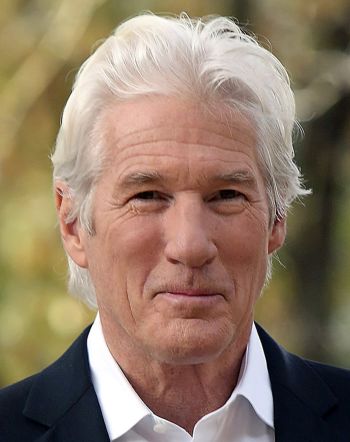
Fake cast: … and Richard Gere as “Robert Zimmerman.”
To the best of my knowledge, no one votes for a candidate based on who will provide the best fodder for a Netflix miniseries. And it’s worth noting that the anticipated Red Wave that failed to materialize nationally in the 2022 Midterms absolutely swept over Long Island, with underdog Republicans upsetting Democrats in several races – including in the Third District, where Zimmerman led in the polls in the days before the election.
It’s still worth exploring, however, how a society that has slowly begun to normalize – perhaps even lionize – con artists and their scams has also started to elect grifters to high office. Santos may be the most salacious, but he’s by no means the only imposter to win an election in recent years.
In both major political parties, there are subsets who seem to want to “burn it down” more than anything else. They value candidates who can shake up or even destroy the system, regardless of the candidate’s credentials or scruples.
For many in these subgroups, Santos’ lies do not matter; in fact, they may be a boon. After all, the lies got him elected, and now that he’s in office, he’s a rubber stamp on their preferred policies.
On a lighter note, Richard Gere is a shoo-in to play Robert Zimmerman in the inevitable Netflix George Santos biopic. And I get it – scams are fascinating. Honestly, it’s fun watching privileged influencers bemoan their cheese sandwiches at the Fyre Festival or ultra-rich bankers get taken by a twentysomething Russian charlatan.
But to broadcast something is to normalize it – and the more we crave stories about con artists, the more likely we are to allow these people to make their way into political office. And when that happens, the damage they’ll do will be no fun at all.
David A. Chauvin is executive vice president of ZE Creative Communications.