
By DAVID A. CHAUVIN //
Two seemingly disparate events have recently captured our collective attention: the British Royal Family’s handling of media relations and Meta’s strategic decision to steer away from political content.
 On the surface, these stories might appear unrelated. But dive a little deeper into the swirling vortex of public relations and the fast-paced media world, and you’ll find a common thread illuminating the evolving landscapes of communications and public engagement.
Imagine this: Catherine, the elegant and poised Princess of Wales, finds herself embroiled in a media frenzy over a photo-editing blunder, enhanced by whispers about her failing health, thanks to a mysterious public absence. It’s the latest two-step in the British Royal Family’s delicate dance with the media – a relationship that’s transformed dramatically from the days of Queen Elizabeth II’s “I have to be seen to be believed” approach.
The unfolding saga revealed not just the Digital Age perils of those in the spotlight, but the shifting sands of public-relations strategy.
Now turn your gaze to Meta’s bold move to dial down its political content. At first glance, it’s a tech story – a Silicon Valley giant makes a policy change – but isn’t it also about how we communicate in our digital town squares? About the kind of conversations we want to foster in our communal spaces? Meta’s pivot underscores a growing awareness of the power platforms wield to shape discourse, echoing the broader conversation about the role of media in public life.

David Chauvin: Digital Age dilemma.
Now here’s the lightbulb moment: Both stories are about visibility and voice in the digital era. The Royal Family’s foray into media controversies and Meta’s policy shift are two sides of the same coin, reflecting the nuanced battle over who controls public-domain narratives.
The Royal Family, once shrouded in mystique, now navigates the treacherous waters of Digital Age public scrutiny. Their experiences highlight a fundamental question: In an era of relentless media scrutiny, is the best approach to tightly control your narrative or to embrace openness and authenticity?
The evolving Princess Kate coverage, from wardrobe malfunctions to scrutinized parental decisions, illustrates this tension. Her journey to becoming “Britain’s new queen of hearts” reveals the potential of authenticity to reshape public perception.
Meta’s decision to minimize political content, meanwhile, recognizes social media’s role in shaping public discourse. It’s an admission that the platforms we use to connect and communicate, if not carefully managed, can amplify divisiveness.
Meta is grappling with its responsibility as a steward of public conversation, a theme that resonates deeply with the Royal Family’s own public-relations evolution.
In recent election cycles, we’ve seen a surge in political engagement on platforms like Facebook and Twitter, where local issues and national debates intersect. This phenomenon reflects a broader shift toward digital campaigning and voter mobilization, with candidates and activists leveraging social media to reach voters directly.
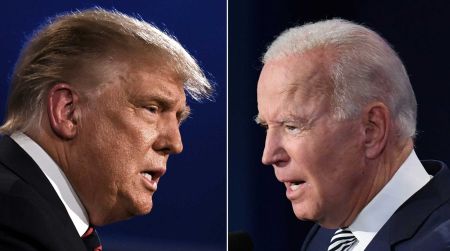
Silence is golden: As the election season heats up, Meta is turning down the political content.
The result? A highly engaged, albeit polarized, electorate that mirrors the national scene.
Moreover, the rise of social media discourse on Long Island has spotlighted the role of digital platforms in amplifying local voices and concerns. From debates over educational reforms to discussions on environmental policies, social media has become a vital arena for regional public engagement.
Yet, as Meta’s policy shift suggests, the challenge lies in balancing this engagement with the need to foster a constructive and respectful public discourse.
What ties these narratives together, from Buckingham Palace’s halls to Long Island’s suburban streets, is the underlying challenge of managing public relations in the Digital Age. Everyone from the British Royal Family to Meta to local politicians is navigating the delicate balance between control, authenticity, privacy and transparency.
Their stories serve as a fascinating lens through which we can view broader shifts in how public figures and entities engage with the world. However, social media has made everyone a public figure – especially among niche audiences.

No, really: Deepfake technology adds another dangerous wrinkle to evolving social media policies.
One approach is legislative. For example, New York State recently enacted a law that prohibits an employer from requesting an employee or job applicant disclose any information from an electronic personal account.
It’s an old-school way to challenge new-school data privacy, but it’s a start. It also doesn’t account for the dangers artificial intelligence brings to the table, as schools across the country deal with deepfakes and their bullying implications. (On Long Island, advocacy organizations like Northwell Health are working to raise awareness about the dangers of social media and the importance of protecting privacy.)
As we reflect on these developments, it’s clear that the strategies employed by public figures and platforms are evolving. The key takeaway? In a world where every move is scrutinized and every word is amplified, the path to engaging effectively with the public might just lie in embracing authenticity and fostering more nuanced, thoughtful approaches to communication.
David A. Chauvin is executive vice president of ZE Creative Communications.