By TERRY LYNAM //
All federal health and human services policies have long-lasting impacts on everyday Americans, including many provisions in the latest version of President Donald Trump’s One Big Beautiful Bill Act – which would disrupt Americans’ ability to access and pay for healthcare for years to come.
 While the prospect of war in the Middle East is, rightfully, dominating world attention, tensions are also mounting this week on Capitol Hill, where the Senate’s Republican leaders – facing resistance from factions within their own party – are trying to jam through a massive budget reconciliation bill and send it back to the U.S. House of Representatives for final passage. Their goal is to get it to Trump’s desk by the Fourth of July.
Sadly, unless they’re impacted personally, I suspect most Americans are oblivious to the potential fallout from the bill, especially the impact of its nearly $1 trillion in proposed healthcare cuts over the next 10 years.
Those living on the economic fringes are bracing for the worst. The House bill, approved by a single vote on May 22, would increase the number of uninsured in this country by 16 million over the next 10 years, according to the non-partisan Congressional Budget Office.
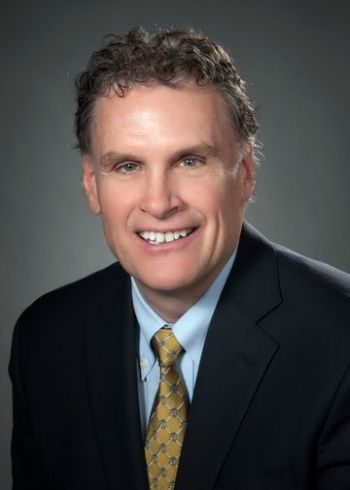
Terry Lynam: National neglect.
The CBO has yet to release estimates on the Senate bill’s impact on Medicaid coverage and savings, but the cuts reportedly go even deeper than the House version by tightening Medicaid eligibility, including more stringent work-requirement provisions.
Those insured through the Affordable Care Act would lose coverage or subsidies that help offset their out-of-pocket costs, because of new rules affecting the ACA marketplaces and the loss of tax credits, due to expire at year’s end. The GOP is also looking to offload onto the States some of the $103 billion the federal government spends annually on the Supplemental Nutrition Assistance Program (food stamps).
Senate Parliamentarian Elizabeth MacDonough, who advises the upper chamber on the interpretation of standing rules and parliamentary procedure, ruled last week that the cost-sharing provisions violated Senate rules. But Republican leaders are trying to rework the bill’s language so it complies.
Aside from stripping insurance coverage and food stamps from vulnerable individuals and families – and potentially sending millions of uninsured patients into medical debt – the Medicaid cuts would devastate many healthcare providers, especially rural and safety-net hospitals like Nassau University Medical Center that primarily treat Medicaid patients and are already financially distressed.
Healthcare leaders warn the consequences could include hospital closures, reduced services and staff reductions, all of which could limit patients’ ability to access care and lead to worsening health outcomes.
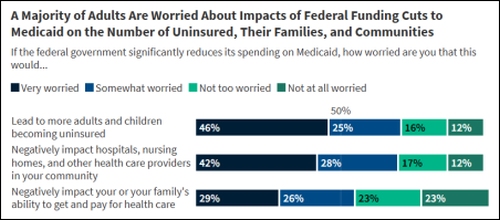
Feeling a little sick: A large majority of Americans are concerned about the OBBBA’s effects on national healthcare. (Source: KFF Health Tracking Poll)
Republican supporters of the bill continue to maintain that a significant chunk of the cuts would be achieved by targeting waste, fraud and abuse in the $914 billion state and federal governments will spend this fiscal year on Medicaid – 64 percent of which comes from the feds.
But some Republicans are worried about the political fallout and are imploring their leaders to soften the blow, particularly as it pertains to rural hospitals. Despite claims that the Medicaid cuts would largely impact recipients who aren’t actually poor enough to earn subsidies, or are otherwise defrauding the system, GOP senators recognize that millions of their constituents across the political spectrum who get their health insurance from Medicaid and the ACA marketplaces are at risk of losing coverage.
While Democrats and independents represent about 73 percent of the nation’s Medicaid beneficiaries, 27 percent are Republicans, including 19 percent who identify as MAGA supporters, according to a poll released earlier this month by the KFF (formerly known as The Kaiser Family Foundation). Perhaps more telling, the same poll shows that nearly half of enrollees in the ACA marketplaces identify as MAGA supporters or other Republicans.
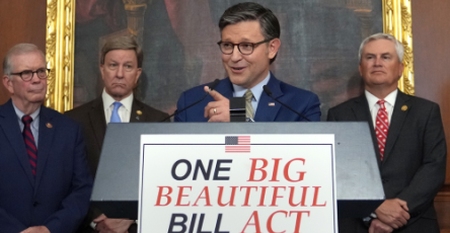
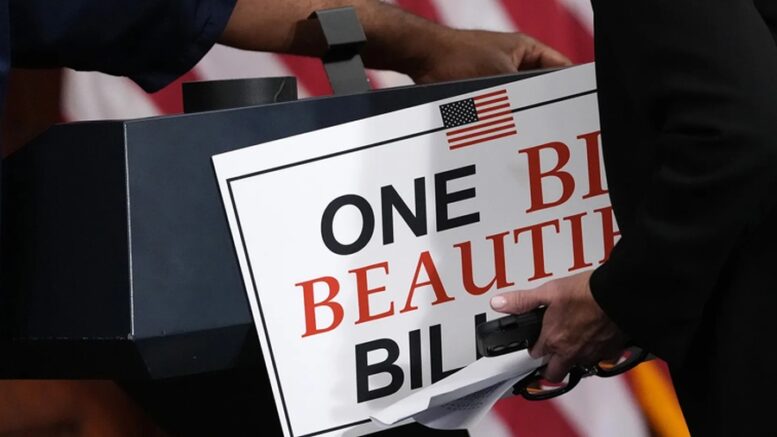
What, me worry?: Supporters of the Big, Beautiful Bill are playing up spending cuts and border security — and turning a deaf ear to Americans’ concerns about healthcare.
Numerous other recent polls show voters have a negative perception of the OBBBA, including a Fox News survey where 59 percent of respondents said they opposed it.
In response, the White House and Republican supporters in Congress tout the bill’s continuation of Trump’s tax cuts – expected to cost nearly $4 trillion in tax revenues – approved during his first term, as well as the OBBBA’s focus on border security and other initiatives supported by Trump’s base.
It’s a fundamental debate about the merits of tax cuts versus government’s obligation to help the needy. And once again, it sure looks like those struggling to make ends meet will come out on the losing end of this fight.
Terry Lynam is a communications consultant and former senior vice president/chief public relations officer for Northwell Health.