By SCOTT BURMAN //
Long Island developers and the broader Long Island community received encouraging news in late May, when Gov. Kathy Hochul signed the 2027 State Budget: new legislation delivering significant reforms to SEQRA, the 51-year-old State Environmental Quality Review Act.
 The new law, known as “Let Them Build,” intends to eliminate duplicative environmental reviews and streamline the approval process for housing and critical infrastructure projects statewide. Supporters hope the law will help ease the housing crisis that has plagued New York with skyrocketing prices driven by limited new products and a historically low inventory.
It’s important to know straight away that Let Them Build operates on the state level only – it doesn’t supplant local environmental reviews and local laws requiring site-plan reviews, land-use approvals, traffic studies, contamination testing and wastewater- and drinking water-capacity analyses.
According to Hochul’s office, studies have shown that SEQRA can slow down New York State housing projects by as much as two years, increasing costs across the board. In New York City, for example, SEQRA reviews increase the cost of building housing by $82,000 per unit, adding up to $8 million in additional costs for a 100-unit development.
Outside of NYC, Let Them Build establishes explicit SEQRA exemptions for residential developments under 100 units built on previously disturbed sites with existing public/community water and sewer service. (The number of allowed units rises to 300 in Census-defined urbanized areas.)

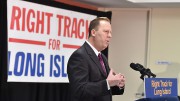
Scott Burman: Building momentum.
This is highly relevant to Long Island’s downtowns, transit-oriented developments and former commercial sites, as well as parking lots and infill sites (smaller parcels) prime for redevelopment.
Additionally, Let Them Build imposes strict timelines on the lead agencies responsible for SEQRA review, including a 120-day determination period for exemptions, a one-year limit for significance determinations and a two-year cap on Environmental Impact Statement completion.
For the 120-day exemption determination in particular, the law is explicit: If the lead agency fails to make a determination within the time limits, an applicant may seek a court order to provide expedient and appropriate relief and direction.
These stronger, important guardrails and exemptions promise to make applicant-funded third-party reviews more acceptable for Long Island municipalities that lack the staff to move complex projects quickly.
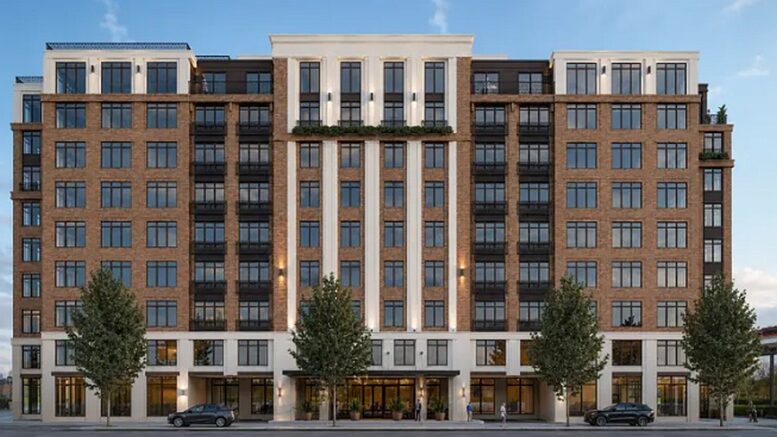
Infill projects are the bread-and-butter of Long Island developers, who mainly build on previously developed land – there are few open tracts on the Island inviting large-scale development. Burman Real Estate, for example, seeks to repurpose or rebuild existing structures where possible or demolish buildings that have outlived their usefulness, constructing multifamily and mixed-use projects in their place to meet the demands of today’s Long Islanders.
Let Them Build has the potential to be a gamechanger for some smaller projects, particularly across Nassau, where roughly 85 percent of the county is served by sewers. It will have significantly less immediate impact in Suffolk, where the lion’s share of residents and businesses still rely on cesspools and septic tanks and development often requires construction of private treatment facilities.

Crisis response: Gov. Kathy Hochul believes “Let Them Build” can start to alleviate New York State’s housing crisis.
While a comprehensive sewer plan for Suffolk is underway, completion will take decades. The positive impact of sewer service is undeniable, as demonstrated in Patchogue and Bayshore, which are enjoying a renaissance in their downtowns and along main streets supported by upgraded infrastructure and new multifamily housing.
Likewise, the downtown business districts of Kings Park, Smithtown and St. James expect to follow suit. Newly installed sewers will service the Kings Park commercial strip as well as the transit-oriented multifamily housing currently under construction near the Long Island Rail Road’s Kings Park station.
While this new law is a necessary change and a first step toward alleviating Long Island’s housing crisis, much more remains to be done, particularly on the hyper-local level. For instance, Nassau County has a historically low rental vacancy rate, exacerbated by a lack of undeveloped land, strict local zoning ordinances and community opposition to multifamily developments.
Increasing housing supply would create a wider market with more affordable options. And while Let Them Build doesn’t put subsidies or tax breaks into developers’ pockets, it does give them something more elusive and equally important: predictability.
If our counties, towns and villages use this new framework as it’s intended, developers will have a clearer picture of timing, cost and risk – as will their investors, the trades and other services supporting their efforts. All Long Islanders stand to benefit.
Scott Burman is the founder and president of Burman Real Estate.