By ZELORY GREGLER //
This just in from our Innovate North Atlantic Bureau: You eat too much.
 Sorry to be blunt. But two weeks in Iceland, Greenland and easternmost Canada have clarified two stark realities: American portions are borderline insane and we, the people, have been stomachwashed.
After months of anticipation, I recently indulged in a barbecued chicken sandwich from a local joint named Struggletown BBQ: pulled chicken, smoked bacon and melted cheese, smothered in barbecue sauce and ranch dressing. The sandwich blew my taste buds and my mind, from the gooey cheddar-jack to the toasted brioche.
But, especially after returning from my Arctic adventure, I was dumbfounded by the size of the thing. To call it “huge” is an insult to Double Quarter-Pounders and Subway Supremes – it was titanic, a two-hander all the way.

Zelory Gregler: You are what you eat.
This is not a slight against Struggletown. The thing was weighty, yes, but classically constructed and tremendously tasty, and the restaurant was only doing what we do here in the overstuffed US of A.
Along with the freshly minted Mrs. Gregler, I recently enjoyed the adventure of a lifetime: A flight to Reykjavik and a slow boat back, with stops in Iceland, Greenland and various Canadian provinces. The missus is an experienced cruiser but this was a first for me, and let me tell you, cruising is the scene, man. The only way to travel.
There’s plenty to do and see, not only in the ports of call – in this case, places like Ísafjörður, Iceland, and Nanortalik, Greenland – but on the ship itself. Ancient volcanoes and pristine fjords, giant icebergs and quaint fishing villages, luxurious spas and flashy casinos. Days at sea with no civilization in sight, hours on a tour bus exploring the Canadian countryside.
And then there’s the food.
The local joints offered everything you could want from an international culinary adventure – exotic foods like fermented shark and lamb hot dogs and moose burgers – and dining on the ship … well, everything you’ve ever heard about cruise-ship dining is true.
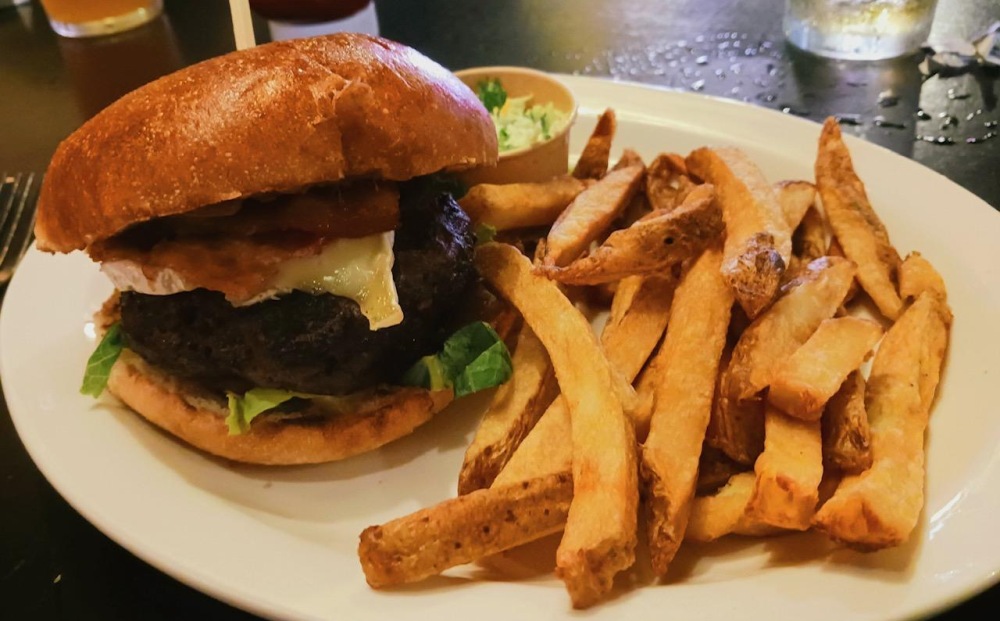
Moose tracks: Yes, that’s moose, and yes, it was awesome.
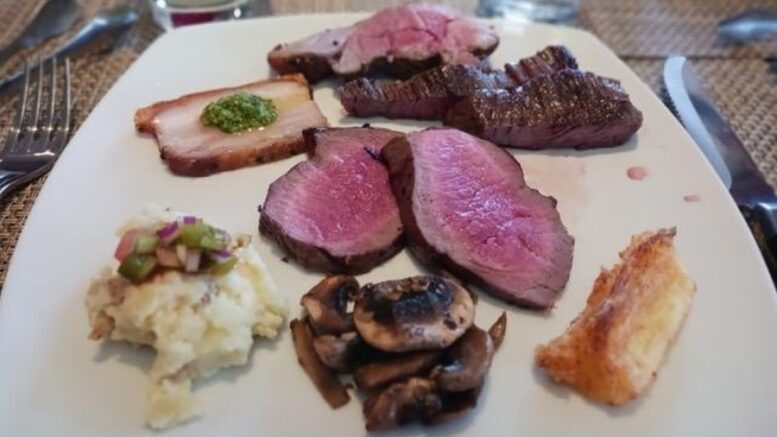
From the Brazilian steakhouse to the French bistro to sushi that might have been swimming off the port bow that morning, the food was stellar. Even the comprehensive buffet, where we breakfasted most mornings and occasionally lunched, was first-rate.
But this is where things get decidedly un-American. And not because you wake up hungry in Reykjavik, dreaming of a Denny’s Grand Slam, and find a hotel breakfast filled with tuna salad and salami slices (and warm milk for your coffee – no half-and-half here!).
It’s the portions, plain and simple.
In America, eateries pride themselves on providing the most bang for your buck – giant barbecue sandwiches, Super Big Gulps, 40-ounce tomahawk steaks, etc. It’s part of our national identity. Go big or stay home.
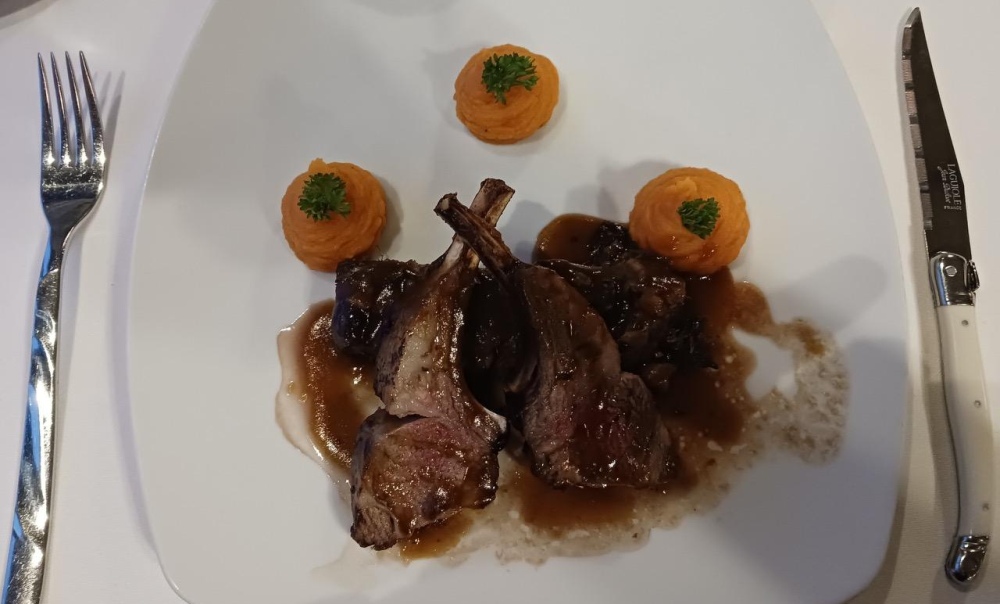
Just a small bite: A rule of thumb aboard the Norwegian Star (even when the lamb chops are heavenly).
I’m reminded of a 1980s marketing flop in which A&W Restaurants attempted to outdo the McDonald’s Quarter Pounder by introducing a 1/3-pound burger. The sandwich stalled quickly, because in addition to voracious appetites, Americans are renowned for poor math skills: 4 is bigger than 3, so a 1/4-pound burger had to be bigger than a 1/3-pound burger. (For the record, sales of A&W’s sandwich soared when it was reintroduced as the 3/9-pound burger).
In America, bigger is always better. But when you order the ravioli with lobster sauce aboard the Norwegian Star, you get three ravioli drizzled with the creamiest and most-delicious gravy. When you order the chicken piccata, it’s two thin-and-perfectly cooked slices of chicken breast – the delicate lemon sauce is the star.
There are exceptions. For dinner in Reykjavik, we stopped by a local pub called The Bastard. Despite an American soundtrack lifted straight from WBAB 102.3, the place had a decidedly European feel, starting with a flight of strong beers that really put the “light” in Coors Light and a dainty appetizer of baked camembert and chili.
Then the meal came. Mrs. Gregler attempted a steak sandwich that would feed a small battalion; I braved the Bastard Burger, top-loaded with cheddar and brisket; both came with a pound of chips (French fries to you).
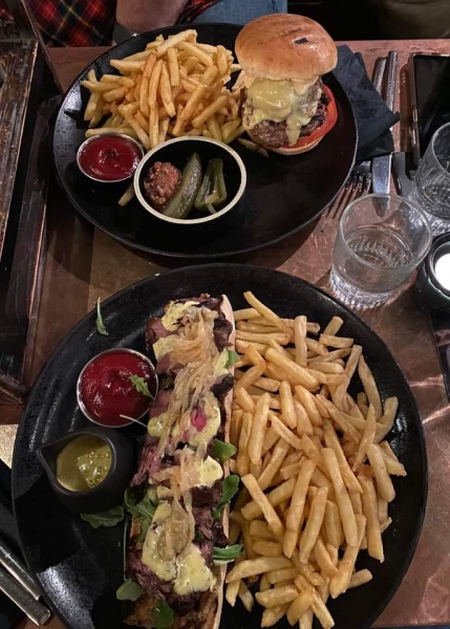
You bastards: Unlike other European eateries, size limits don’t apply at The Bastard in Reykjavik.
Except for the sweet tomato relish tucked under the fries – a reminder that you’re truly not in Kansas anymore – the ginormous meal belied everything else we’d experience on our international menu (except for dinner in Moderno Churrascaria, the Norwegian Star’s Brazilian steakhouse, where the protein keeps coming until you beg them to stop).
Even the world-famous Icelandic lamb-meat hot dogs (how famous? Ask Bill Clinton) were relatively tiny – tasty, with their brown gravy and chopped onions, but small.
Aboard the ship, we also dined at Le Bistro, an authentic French bistro where escargot, goat-cheese croquettes, tender lamb chops and marinated pears set the tone – each in the most delicate portions, each a stunning triumph of texture and taste.
During a stop on Vigur Island – a 2-kilometer stretch of frosty rock in a far-flung corner of Iceland’s remote Westfjords – I chatted with Gísli Jónsson, who actually owns the island and lives there with his wife (the famous arctic explorer Felicity Aston) and their 7-year-old son. They’re the only human residents, living amid thousands of exotic birds: puffin, terns, eider ducks and more.
I asked Jónsson what he eats in a typical day. “Not much,” he replied.
Breakfast? Coffee and buttered toast. Lunch? No such thing; he “snacks” while working his day away. Dinner is meat (“Iceland has the best lamb,” the farmer told me, “and the horsemeat is good”) and some variation of rhubarb, which grows plentifully in the rough environment. (Often hjónabandssæla, a traditional rhubarb cake enjoyed by most Icelandic families.)
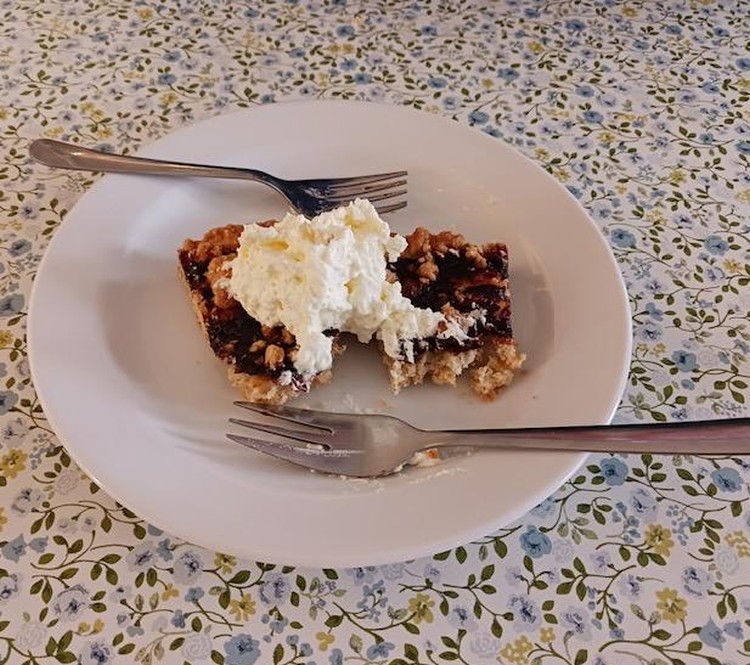
From the heart: Behold, the hjónabandssæla.
From their remote home, it’s 45 minutes by boat and car to the nearest market, so “we try to [shop] as little as possible,” Jónsson said. “We have lots of freezers, lots of coolers.
“[Eating] is very different here,” he added. “The portions are definitely smaller.”
Of course, they’re not missing a thing. Smaller portions, like larger portions, are a learned behavior. And it slows you down – when the cotton-soft beef tenderloin aboard the Star is the size of your smartphone, you chew thoughtfully. You enjoy it more.
After a wonderful dockside concert in Port Jefferson the other night, Mrs. Gregler and I stopped at McNulty’s Ice Cream Parlor for dessert. My sundae had three great scoops of ice cream, chocolate topping, two handfuls of peanut-butter cups, whipped cream and sprinkles.
I managed to force it down. But honestly, I was craving a small slice of hjónabandssæla the whole time.
Zelory “Celery” Gregler has been cooking for most of his life, and eating for all of it.