By ALLISON SINGH //
Intellectual property wasn’t a big subject in 2024 campaign speeches or political slogans, but it will play a big role in the new Presidential administration.
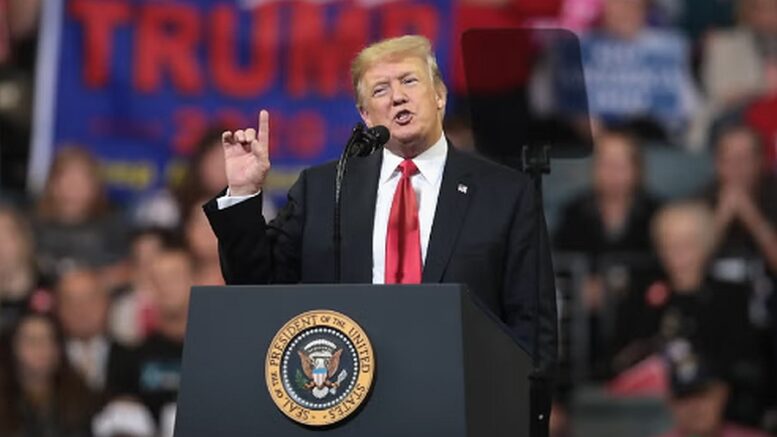
 This is especially true given President-elect Donald Trump’s tough talk on China and American economic growth. Trump will oversee the continued evolution of artificial intelligence, robotics and other innovations; as a businessman and conservative, he likely views strong IP protection as necessary for growth, whereas many progressives see it as a corporate tool to minimize competition and keep prices high.
From appointments to trade policy, Trump will have several ways to strengthen IP rights and, hopefully, the industries they support.
For instance, the president has the authority to appoint a new director of the U.S. Patent & Trademark Office. Trump will likely pick a business-minded director who favors strong patents less vulnerable to challenge.

Allison Singh: Relying on wisdom and judgment.
But let’s not forget that the USPTO is an executive agency, part of the “administrative state” that Trump has targeted for upheaval. Whether this agency escapes the scalpel of the newly created Department of Government Efficiency remains to be seen.
Intellectual property is federal law, which means the judges hearing these cases are appointed at the federal level. By and large, conservative justices are more concerned with protecting private rights and agreements – such as IP licenses – than public policy objectives.
President Joe Biden was seen as anti-patent because of his public policy priorities – in particular, supporting the World Trade Organization’s decision that COVID-19 treatments could not be patented. For some, this was considered unfair to the U.S. government and domestic pharmaceutical companies that made substantial investments in developing those vaccines and treatments. Such sacrifice in the name of the public good might be a tougher sell in the Trump administration.
Trade representatives appointed to take a hard line against China will likely use IP enforcement to pressure the current Chinese regime. In his first administration, Trump authorized trade officials to investigate China for acts harmful to U.S. intellectual property, while a similar Justice Department initiative aimed to combat theft of intellectual property by Chinese nationals.
But all of that was terminated when Biden took office because of reported racial profiling and other adverse impacts on Asian Americans at research institutions.

Negative reaction: Big Pharma was not thrilled with the World Trade Organization’s decision — supported by President Joe Biden — that COVID-19 vaccines could not be patented.
Trump will be president during the continued revolution brought by AI, robotics, driverless cars and more cutting-edge developments. Innovations such as these push the law in new directions and often challenge our existing regulatory regimes.
Case in point: In an October 2023 executive order, the Biden administration asserted a role for government in the development and safety of AI. It would not be surprising if this executive order was withdrawn and replaced with a self-policing, industry-friendly approach (even though many industry leaders supported Biden’s action).
On the robotics front, it will be interesting to see how the Trump administration balances new technology with support for workers and unions at manufacturing plants, especially if manufacturers do return to U.S. shores. A more hands-off approach at the Federal Trade Commission will pave the way for mergers and acquisitions that could enable and quicken the pace of innovation.
We could see fewer foreign filings for IP protection as more goods are manufactured domestically. The fear of a mold, prototype or pre-launch product slipping out of the factory is greater in China and Mexico than in the United States; enforcement in these countries has always been a challenge due to weak IP protections and prejudice against foreign plaintiffs.
Intellectual property stands to do well in a second Trump administration. These are private rights tied to economic growth in a time when both are a high priority.
These priorities do have their limits, though, as Biden recognized with patent rights and the COVID-19 vaccine. That’s when we must rely on our leaders to have the wisdom and judgment to make the right decision for the common good.
Allison Singh is of counsel and a member of the Corporate and Intellectual Property groups at Riverhead-based Twomey, Latham, Shea, Kelley, Dubin & Quartararo LLP.