By JEFFREY L. REYNOLDS //
André “Doctor Dre” Brown can’t prescribe Ozempic because he’s not that kind of doctor, but that hasn’t stopped the Beastie Boys DJ and 1990s co-host of “Yo! MTV Raps” from dishing out advice about preventing and managing Type 2 diabetes.
 The rap pioneer grew up in Westbury and scratched records with Public Enemy’s Chuck D at Adelphi University’s WBAU radio station in the mid-80s. He shouldn’t be confused with the West Coast producer and gangster-rapper of the same name – this Dre was diagnosed with Type 2 diabetes in 2007 and has since lost his eyesight, a couple of toes and his right leg.
That might slow some people down. But the energetic entertainer and DJ – who now considers himself Super B.A.D. (for “Blind, Amputee, Type 2 Diabetic”) – is partnering with the South Bronx-based community-based health organization Health People to help minority communities “save our limbs, save our toes and save ourselves.”
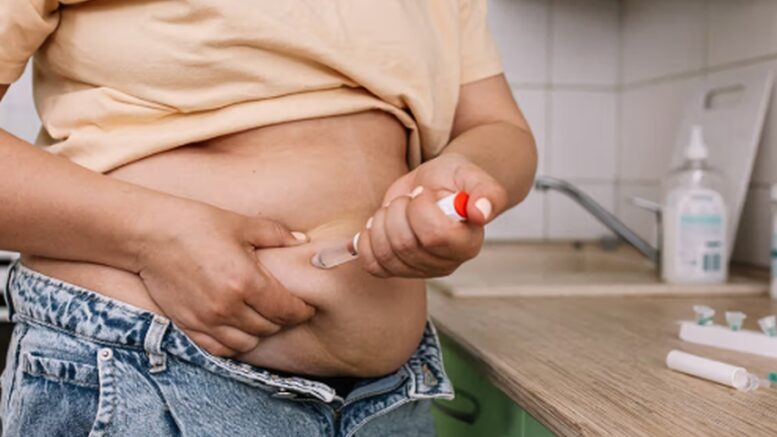
About 1 in 10 Americans have diabetes and up to 95 percent of those patients have been diagnosed with Type 2 diabetes. Type 1 diabetes is an autoimmune disease that prevents insulin production; Type 2 occurs when your pancreas doesn’t produce enough of the hormone, or your body can’t use it effectively.
An estimated 1.8 million New York State adults – about 11 percent of the state’s population – have been diagnosed with diabetes. The New York State Department of Health says another 5.3 million New Yorkers may have prediabetes, a condition where a person’s blood-sugar level is higher than normal, but not high enough (yet) for a diabetes diagnosis.
Jeffrey Reynolds: Can’t sugarcoat this.
Black and Hispanic New Yorkers have higher rates of the disease than their White counterparts and adults with an annual household income of less than $25,000 are most likely to be diagnosed with diabetes.
Across Nassau and Suffolk counties, Black residents are two-and-a-half times more likely to die of diabetes than their White neighbors – and four times as likely to be hospitalized with complications, which could include limb amputations.
A 2022 Community Health Needs Assessment conducted by Catholic Health, the Long Island Health Collaborative, the Nassau County Department of Health and local health organizations found that Elmont, Freeport, Glen Cove, Hempstead, Inwood, Uniondale, Roosevelt and Westbury have disproportionately higher rates of diabetes than statewide and national averages.
Given that poorly controlled diabetes is a principal cause of end-stage renal disease, it’s no surprise that so many storefront dialysis centers are popping up in minority communities. A recent nationwide survey conducted by the U.S. Centers for Disease Control and Prevention found that dialysis was more available than patient-education services in counties with high diabetes prevalence.
The American Diabetes Association’s Amputation Prevention Alliance says that as diabetes cases have risen, so have avoidable amputations. Still, they estimate that 160,000 diabetics lose their toes, feet, legs or arms each year – and most of those limbs are probably black or brown (a 2023 study found that Black and Latino diabetics are a whopping four times more likely to require an amputation than diabetics of other ethnicities).

Dark matter: Black and Hispanic diabetes patients are much more likely to require limb amputations.
Beyond the significant loss of mobility and independence that accompanies a major amputation, life expectancy plummets – and up to 35 percent of diabetic amputees will eventually require a second amputation.
If Type 2 diabetes is connected to obesity, then won’t the widespread use of trendy weight-loss drugs – some of which have been used to treat diabetes for many years – also potentially prevent the disease?
Maybe.
A paper published last month in The New England Journal of Medicine showed that the compound in the diabetes drug Mounjaro and the weight-loss drug Zepbound reduced the chances that overweight or obese adults with prediabetes would go on to develop diabetes by 94 percent.
Recognizing that diabetes patients skew older and poorer, President Joe Biden has proposed a rule that would give those on Medicare and Medicaid access to otherwise unaffordable GLP-1 weight-loss medications like Ozempic and Wegovy. The long-term healthcare cost savings could be significant.
But this proposal, made in the closing days of President Biden’s term, is probably doomed. Robert F. Kennedy Jr. – President-elect Donald Trump’s nominee to run the U.S. Department of Health and Human Services – is an outspoken opponent of weight-loss drugs.
Many physicians see GLP-1 drugs as potentially helpful in the fight against diabetes, but also worry that their allure will fade given their side effects, consumers’ unrealistic expectations and their high costs.
All of which brings us back to some old-school healthcare innovations: maintaining a healthy weight, quitting smoking, eating healthy and exercising often. In Black, Hispanic and all other communities, this can make things a lot easier.
Jeffrey Reynolds is the president and CEO of the Garden City-based Family and Children’s Association.