
By DAVID. A. CHAUVIN //
Social media, artificial intelligence and Google Maps have killed the modern cheat code.
 For many Gen X kids, cheat codes were once sacred knowledge. You didn’t find them through an algorithm or AI-generated summary. You heard about them from a friend, an older cousin, a gaming magazine, or the kid at school who somehow knew things before everyone else.
There was something satisfying about discovering information that still felt hidden, earned and slightly exclusive. A cheat.
Today, of course, every cheat code is online within minutes. And increasingly, it’s not just video games.
A friend of mine has been attending Lollapalooza for more than a decade. Like any veteran attendee of any regular event, he developed his own set of cheat codes over the years.
He knew which hotel offered the easiest access to the grounds without surge pricing. He knew which venue entrance moved fastest. He knew the ideal time to arrive and how to navigate the crowds, like a local navigating Manhattan side streets.
Then social media happened.

David Chauvin: Cheat day.
Every “secret” he spent years discovering was suddenly online. Reddit threads detailed the fastest entrances. TikTok creators mapped the best routes. YouTube videos broke down how to “Lollapalooza like a pro.” His hard-earned veteran knowledge had become public infrastructure.
The cheat code died.
I thought about this recently during a family trip to Italy. Before we boarded the plane, social media had already mapped much of the experience for us. It told us where to eat in Rome, which Florence sandwich shop was worth the wait and the least crowded Vatican entrance. Exactly when to arrive nearly everywhere.
To be clear, much of this is wonderful. Travel has become easier, more accessible and less intimidating. The Internet has democratized information that once belonged only to seasoned travelers, locals or the lucky few who stumbled accidentally into great experiences.
But something subtle has changed. And Long Islanders understand this phenomenon better than most.
Before GPS and real-time traffic apps, every commuter seemed to have his or her sacred rush-hour shortcut. A side street near Route 110. A service road strategy that shaved 10 minutes off the LIE. Knowing exactly when to avoid the Southern State.
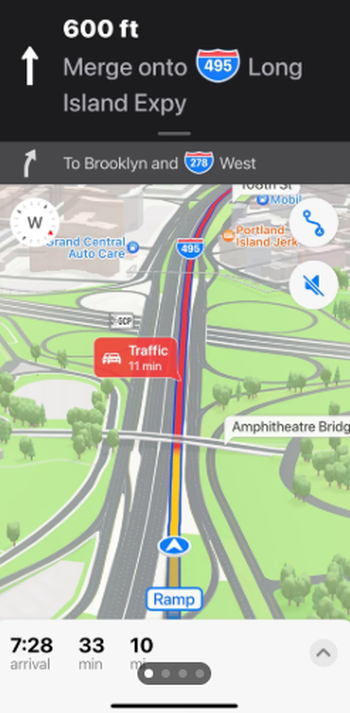
Follow my lead: Real-time travel apps can get you there faster — but not necessarily smarter.
Such shortcuts once functioned like folklore – knowledge accumulated through years of local observation, struggle and reward.
Then Google Maps arrived and distributed his sacred shortcuts and her sacred shortcuts to everyone, everywhere, at the exact same moment. Just like that, each shortcut stopped being a shortcut.
For years, experience itself created value. Travelers discovered neighborhoods through wrong turns and conversations with strangers. Young professionals learned networking and office politics through observation and repetition. In public relations and politics, some of the most valuable lessons never appeared in manuals or classrooms – you learned them by showing up.
None of that information was searchable. It accumulated over years of mistakes, observation and relationships. Access mattered.
Today, almost everything eventually becomes content. The hidden restaurant becomes a viral TikTok. The travel shortcut becomes a Reddit thread. The networking strategy becomes a LinkedIn carousel. Increasingly, expertise itself is packaged into instantly consumable “how to do it better” content.
And AI, perhaps, represents the ultimate cheat code. Instant strategy. Instant recommendations. Instant copy. Knowledge that once took years to gather, now generated on demand.
There’s an irony in all of this. When everyone has the cheat code, the cheat code stops being valuable. A cheat.
This shift is changing communications and marketing, too. Organizations once treated information itself as the value proposition. Early access mattered. Insider knowledge mattered. The clever hashtag or exclusive invitation often felt like the differentiator.

Lotsa Lollapoolaza: You’re going to need help navigating this.
Now everyone has access to the same platforms and, increasingly, the same AI-generated strategies.
Which means the advantage may no longer come from hiding information, but from creating experiences people actually want to talk about.
Access is no longer the differentiator. Judgment is. Timing is. Taste is. Emotional intelligence is. Relationships are. Knowing what actually matters – and what doesn’t – may become the rarest skill of all.
The Internet can tell you where to stand at Lollapalooza or where to find the perfect pasta in Rome, but it still can’t teach instinct. It can’t replicate trust earned over decades or the human ability to navigate uncertainty and complexity.
Maybe that’s the real lesson of the modern cheat code era: Information has never been more available, but wisdom still must be earned.
Even if part of us misses the days when a few secrets belonged to those who earned them. Up, Up, Down, Down, Left, Right, Left, Right, B, A, Start.
IYKYI.
David A. Chauvin is executive vice president of ZE Creative Communications.