

By DAVID A. CHAUVIN //
It’s only natural to worry about the consequences of new technology, especially in the communications business.
 If we went back a few millennia, we’d encounter cave-dwellers fretting about this revolutionary new “paper” thing, and how it was going to ruin the cave-drawing business. In our time, media types (of a certain age) have seen such disruption firsthand, watching helplessly as the Internet all but decimated the newspaper.
Despite this firsthand knowledge – or maybe because I’ve been hardened by it – I have a difficult time worrying that OpenAI’s ChatGPT and other artificial intelligence-generated content creators are going to make us media execs obsolete. At least, not until long after I’ve gone the way of the caveman.
I don’t want to undersell how impressive AI “chatbots” like ChatGPT can be. It’s frankly amazing. Ask ChatGPT to spit out some Shakespeare, and within seconds you’ll think you’ve stumbled across a lost sonnet; ask it for an article on the debt ceiling and you’ll have something to submit to your editor before morning coffee.

David Chauvin: What, me worry?
Use the thing for even a few minutes, and it’s almost impossible not to image how, with some fine tuning, ChatGPT could replace entire industries.
It pains me to say it, but AI could do wonders for startups and other innovative early-stage organizations that lack the resources for a proper marketing team. For a coder who just built a great app but doesn’t necessarily know how to articulate its value, or an entrepreneur who doesn’t have time to develop website copy, just ask ChatGPT – it’ll even write a press release when you launch. (Yikes!)
Writer’s block? Plug in “write a 1,000-word article about ChatGPT’s impact on the communications industry” and sit back. It’ll produce a well-manicured, passible article; then you can spend your time editing, as opposed to the daunting task of starting from scratch.
And that’s just a one-off. For entities that focus on constant content production, this could enhance productivity the way the calculator did for mathematicians.
But while ChatGPT works in a pinch, it lacks connection, awareness and specificity – a level of disingenuousness that often leads to getting caught in a media spiral. There is a long road between “pretty amazing” and “ready to replace humans,” and so much recent history demonstrates why that’s a road that often takes longer than our lifetimes to travel.
 Self-driving cars have been in production in some form since at least the 1980s (or way earlier), with more recent decades introducing startlingly proficient and capable driverless vehicles. But how many self-driving cars did you see on your way to work today?
Like AI chat features, self-driving cars are amazing at replicating the basic functions of traditional methods – and abysmal at understanding the nuances of them.
It’s also interesting to think about the ancillary jobs that often result from disruptive technology, so we can best adapt to what comes next. For example, prompt engineers – well versed in how to get the best output from an AI bot – might be in low demand now but could become incredibly valuable as AI becomes interwoven into workflows.
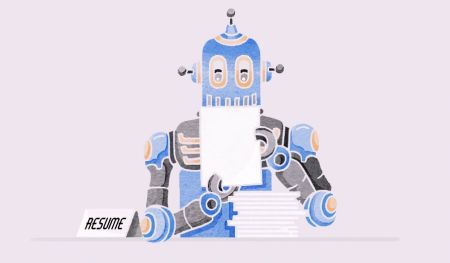
Now hiring: Not yet … at least, not in the media biz.
In marketing, especially in the world of politics and government, writing is only part of the job. The other parts, perhaps the larger parts, are about aligning the message with the overall narrative, so it connects to the target audience’s needs.
Give ChatGPT more comprehensive tools to generate output that feigns human connection and understanding, and it could grow into a tool that can be incorporated across industries.
But it’s not going to replace that human connection – at least, not for the foreseeable future.
David A. Chauvin is executive vice president of ZE Creative Communications.





David, you’re right. ChatGPT isn’t going to “replace that human connection” in the foreseeable future, but I already see it having an impact regarding the need for PR writers. Just the other day I needed ten sample questions to supply to a reporter who would be interviewing a client of mine on a given topic. So, I pasted the press release into ChatGPT and gave it a command to write 10 questions an interviewer could ask my client. And like magic, it spat out 10 very relevant, thoughtful, very usable questions. As a sole proprietor, in the past, I would have handed this assignment to a subcontractor. But there was no need with ChatGPT. Same with converting a press release into a media advisory. It handled it deftly and accurately — again, a task I would have handed off to a subcontractor. So, while ChatGPT isn’t going to replace the human connection with the client anytime soon, I see it having a profound impact on the public relations/marketing workforce. MARK GROSSMAN
EDITOR’S NOTE: Chiming in on this one! Mark, coming up with 10 relevant questions (and asking them) is swell. But after 30 years of interviewing, I can tell you that the best question is ALWAYS the NEXT question — the one I ask on the spot, in response to the interviewee’s answer. And when I’m molding a press release into a story, it’s the inside-baseball additions (references to related stories and issues, clever turns of phrase, winks to the audience) that give it value. Until somebody programs in some more personalized character (and maybe that’s not far off), ChatGPT-driven work will be right down the plain-vanilla middle, one media advisory the same as the next, based on the same data-driven questions. Stories will be directed by computers and dictated (literally) by the subjects. As professional communicators, we should be horrified (and maybe a little terrified!). If anything, ChatGPT is shining a bright light on human individuality … on the beauty of experience and true, earned skills.